
Garage Sale or Estate Sale?

By Nancy Patrick
Several years ago, I wrote a piece about how my mother’s life seemed to become smaller as she aged (THE CASE OF THE SHRINKING WOMAN | Spirit Of Abilene). I had many opportunities to observe as time and age-related health issues began to change both my parents’ lives. As I watched their lives evolve, I thought I could prevent in myself the changes I had observed in them.
I learned that my senior season of life manifests itself in various ways to different people. Some unavoidable changes may include both physical and/or mental adjustments. None appear pleasant or desirable, but factually the elder years may include difficult situations in many ways.
One of the challenges occurs at the death of a spouse. Loneliness, financial concerns, social life, and domestic environments become important factors. My husband Mike and I recently made the decision to drastically change our lifestyle when we moved to a retirement community (Returning from a Hiatus | iSpirit Of Abilene). We luckily had some options to ease the pain of our transition, but others choose various ways to do this based on individual needs or desires.
One of the major decisions comes in the form of downsizing to smaller accommodations. At that point, we face the question: Do I need to have a garage sale or an estate sale? And yes, a vast difference stares us in the face. Obviously, a garage sale is less dramatic than the estate sale because that event simply rids the household of the extra things that have accumulated and take up space in closets and garages–clothes, odds and ends, books, duplicate kitchen gadgets, old yard equipment, and other items that collect dust because of disuse.
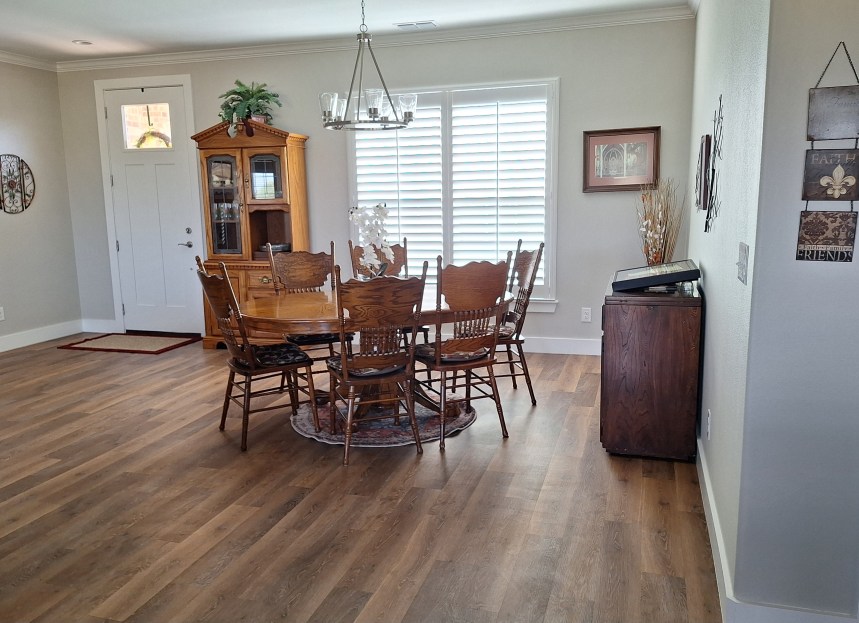
Dining area in Mike and Nancy Patrick’s new home
The estate sale resembles major surgery. Not a tonsillectomy, the estate sale resembles a kidney transplant. Many people choose to ignore the issue by merely leaving all the details to their heirs. Mike and I wanted a more hands-on approach so we painfully but honestly decided to treat this move as a major lifestyle change that entails cutting our possessions down to what we truly need, use, or attached to emotionally.
First, we invited our only child Jason to have anything he wanted. He didn’t need or want furniture, dishes, or yard tools. As a theologian like his dad, Jason selected about 100 books from Mike’s library. He also remembered some old things we had stored in the attic, including a harpsicord Mike’s aunt had given him.
My treasure chest through the years has been a set of annotated picture albums I began in 1974 during my pregnancy with Jason. I continued that hobby into the pre-teen years of his daughter Hannah’s life. It’s hard to explain how much that collection of albums means to me.
The assortment consists of approximately 20 albums that hold memories of some of the most precious moments of my life. He and our granddaughter have loved those albums through the years, so now they have them and can look at them any time they want. I hope they can recapture the feelings of love we have felt for them throughout their lives.
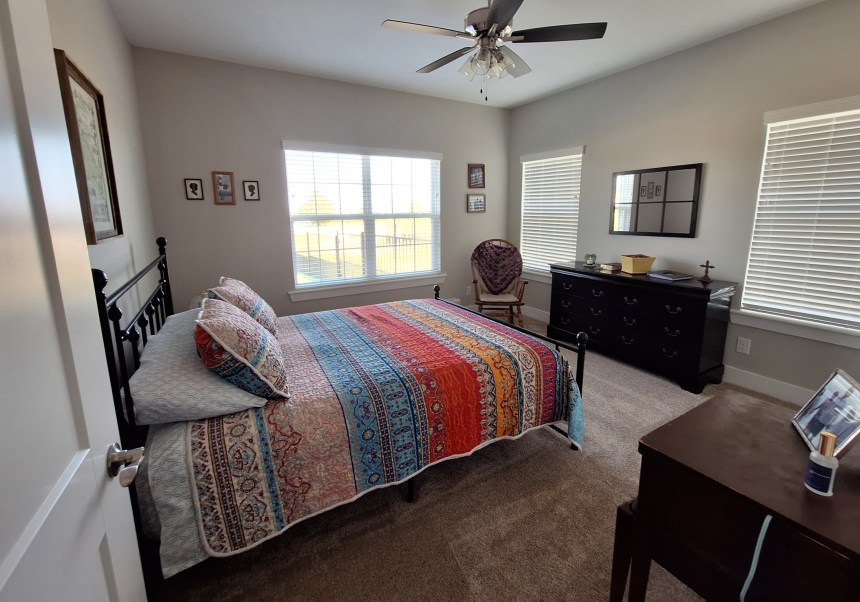
Guest room in Mike and Nancy Patrick’s new home
Now, back to the estate sale. We decided to become minimalists in our new home. We sold much of our furniture—the heavy living room suites and bedroom ensembles, extra dining room tables, lawn mower and landscaping tools, and large ottomans. We replaced the heavy furniture with iron bed frames, a love seat and occasional chairs, and a practical coffee table that elevates to table height.
All that I have described so far relates to visible things. The really sentimental items were in large rubber tubs in the attic. Imagine 57 years of Christmas decorations and other seasonal décor. As our lives have changed over the years and we no longer have children in the family, I have eliminated much fuss over details I went to in younger years. I hope that some young families who stopped by the estate sale will love and enjoy some of the Christmas treasures they found.
The hardest part of selecting what to keep and what to part with relates to the reason for keeping or not keeping them. So much of our “stuff” simply sat in boxes, never looked at or appreciated anymore. We decided to keep what we use and want to continue holding on to while we passed on items to make others’ memories.
As I talked with one of my new neighbors recently, we shared our thought on this “estate” stage of life. What we discovered in this necessary phase of reality reminds us that our real “estate” resides with God. I Timothy 6:7 says, “We brought nothing into the world and we can take nothing out of it.”
Another comforting reminder in Hebrews 13:5 states, “Keep your lives free from the love of money and be content with what you have because God has said ‘Never will I leave you or forsake you.’”
Nancy Patrick is a retired teacher who lives in Abilene and enjoys writing

