
Valleys of Darkness
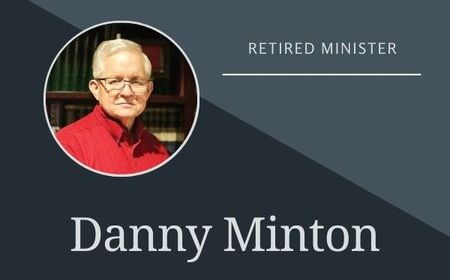
By Danny Minton
I came across an old sermon illustration about a family whose house had caught on fire. The parents had gotten their family to safety and were trying to save some valuables when their young son snuck into his room to get his favorite toy from an upstairs bedroom. The fire spread to the stairway, and the little boy, unable to exit, ran back to his bedroom and opened the window. His parents were in a panic trying to find him when his father heard him screaming from the upstairs window.
Unable to go back into the house, the boy’s father stood below the window and told his son to jump: “I’ll catch you!” He yelled out. With smoke getting heavy and the boy’s eyes watering, he cried, “Daddy, I can’t see you!” His father, looking up, calmly assured him, “That’s okay, you can’t see me, but I can see you.” “Jump.” The boy took the leap, trusting his father’s words, and landed safely in his arms.
Reading the story reminded me of one of the most famous Psalms, written by a young shepherd named David. The Psalm is Psalm 23, often used at funerals and to comfort those who are physically passing, but David mostly directs it to the living and those going through all sorts of tough times. He begins, “The Lord is my Shepherd.” Those words are the key to what follows. A shepherd took care of his flock. He made sure they were fed, cared for, and, most of all, kept safe from dangers lurking in the surrounding hills and valleys. He expresses how God takes care of all his needs, and when he looks to Him, he lacks nothing.
Then there’s that passage whose true context we often misunderstand. “ Even though I walk through the valley of the shadow of death, I fear no evil, for You are with me; Your rod and Your staff, they comfort me.” Psalm 23:4 (NASB) Shepherds often had to guide their sheep through dangerous valleys in the wilderness, subject to rockslides, thieves, wild animals, and even the possibility of flash floods. In addition, the valleys would often become dark as the walls blocked out the sun, leaving the shepherd to trust that the journey ahead was safe. David’s Psalm expresses how, in these tough, scary times, he trusted in God to carry him through it. The word for “shadow of death” is interpreted, “Deep Darkness.”
We all have times in our lives when we find ourselves faced with times of “deep darkness.” Death is one of those, but David is saying that we have to trust in God no matter what our “darkness.” Devastating news of injuries and illness, or maybe it’s family issues, or dealing with issues left behind by someone who has passed. Finding ourselves dealing with situations at home for which we can’t see an answer. Life is full of situations that fill our minds and hearts with fear and concern. David’s words tell the living: when you go through valleys of deep darkness, put your trust in God. In those dark hours, you may not be able to see Him, but he can see you. Trust that he is there and leap into his arms.
David doesn’t promise miracles, but he does promise that God cares for us at every step of our lives. In closing his Psalm, he announces a promise from God when he proclaims, “Surely, goodness and lovingkindness will follow me all the days of my life. And I will dwell in the house of the Lord forever.” (v. 8)
As I often pray with others, my reminder is to remember that, no matter what trial you face, God will never leave you alone. He will always be by your side in your “Valleys of Darkness.” You can’t see Him, but he definitely sees you.
Danny Minton, a member of Southern Hills Church of Christ, is a hospital chaplain

