
One Nation Over God
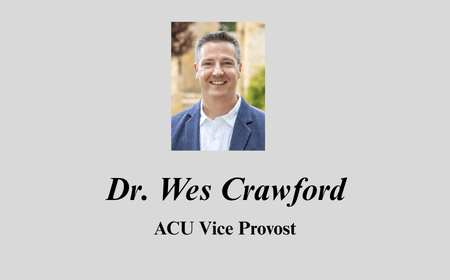
By Dr. Wes Crawford
Have you ever visited Branson, Missouri? If so, you’ve likely ventured into one of its many family-owned theaters. Each night, performers take the stage to entertain visitors with music and comedy. Typically, Branson crowds are religious, so toward the end of every show, the performers harmonize on Christian classics like “Amazing Grace” or “How Great Thou Art.” The audience listens appreciatively and offers polite applause from their seats. They really do appreciate these hymns.
But then comes the finale.
The stage lights change colors, a massive American flag unfurls on the screen, and the familiar opening chords of “God Bless the USA” swell through the auditorium. Instantly, the crowd rises as one. Their shoulders square, they place their hands over their hearts, and a hushed, sacred reverence sweeps the room.
As a teenager sitting in one of those theaters, a question quietly formed in my mind: Why do we remain seated for the gospel hymn, but leap to our feet for the patriotic song?
That question has lingered with me for decades. I thought about it as a teenager, as a young adult, and throughout my career as a preacher and a professor of church history. The more I observed American life (from church foyers and Little League games to national political conventions), the more I realized this wasn’t just about a phenomenon that showed up in family-owned theaters in the Ozarks. It is about a deep, often unacknowledged tension sitting in pews and living rooms across our country: the blurring of lines between Christian faith and American patriotism.
My new book, One Nation Over God (released this week by Wm. B. Eerdmans Publishing Co.), was born out of that tension. It invites readers to explore how our faith and our love of country became so thoroughly tangled and how we can untangle them without abandoning either.
When America began, our founding leaders made an unusual and unprecedented choice: they created a nation without an official, established state religion. We may take religious freedom for granted, but they didn’t. Religious freedom was a new idea with important consequences. Religion, as most of us realize, not only connects us to God; it also connects us to one another. Civilizations need a shared story to hold together, and for millennia, religion has created that shared story for us. In place of a state church, however, Americans gradually developed what sociologists call “civil religion.” We adopted sacred texts (the Declaration and Constitution), sacred rituals (the Pledge of Allegiance and national anthem), sacred holy days (the Fourth of July and Memorial Day), and a communion of saints (our so-called “Founding Fathers” and fallen heroes).
This shared civil religion has mirrored the role that traditional religions have historically played in other civilizations. It united a diverse nation and inspired tremendous moral courage, from the abolition of slavery to the Civil Rights Movement. But civil religion also carries a quiet, perilous danger: it tempts us to confuse the kingdom of God with the United States.
When this happens, we cross a subtle line from being “one nation under God” to living as though we are “one nation over God.” We begin using scripture to justify political power rather than holding power accountable to scripture. We risk turning our faith into a political platform and our patriotism into an idol. I don’t have to convince you that this happens. You’ve seen it in the news, in your church, and maybe even in the mirror.
I wrote this book for frustrated Christians I’ve encountered at church on Sunday morning. I wrote it for everyday Americans who are absolutely exhausted by culture-war hostility. I wrote it for pastors and other church leaders navigating politically divided congregations, for parents wondering how to pass down a resilient faith to their children, and for young adults who have walked away from church because Christianity started to look more like a commercial for Fox News or CNN than the self-giving love of Jesus.
When our civil religion blurs into idolatry, we are tempted to treat America itself as the kingdom of God, and we may become slow to critique it. We may even criticize those who do offer critique, calling them “un-American” or “un-patriotic.” True patriotism, though, does not require blind flattery. Throughout American history, some of our greatest heroes (figures like abolitionist George Washington Julian, pacifist Dorothy Day, and civil rights icon John Lewis) loved this nation deeply. Yet precisely because they loved America, they refused to love it uncritically. They knew holding our country accountable to justice and humility isn’t unpatriotic. In fact, sometimes, it is discipleship.
Are you looking for a fresh perspective on today’s polarized landscape? Are you looking for a grain of sanity ahead of the mid-term elections? Are you longing for a faith that transcends the political wars? If you answered “yes” to any of these questions, I invite you to pick up a copy of One Nation Over God and join the conversation.
Dr. Wes Crawford is Vice Provost of Abilene Christian University

