
Dia de los Muertos: Distinctions
By Aida Pantoja
Día de los Muertos (Day of the Dead), celebrated primarily on Nov. 1 and 2, is a beautiful tradition with deep roots in Mexican Indigenous cultures and Catholic beliefs. Although the celebration is now recognized in both Mexico and the United States, there are some meaningful differences in how it is observed.
Yes, in many parts of Mexico, Día de los Muertos is more closely connected to family traditions, visits to cemeteries, and religious practices. But it is not necessarily more solemn everywhere. It can be deeply emotional, spiritual, colorful, joyful, and festive all at the same time.
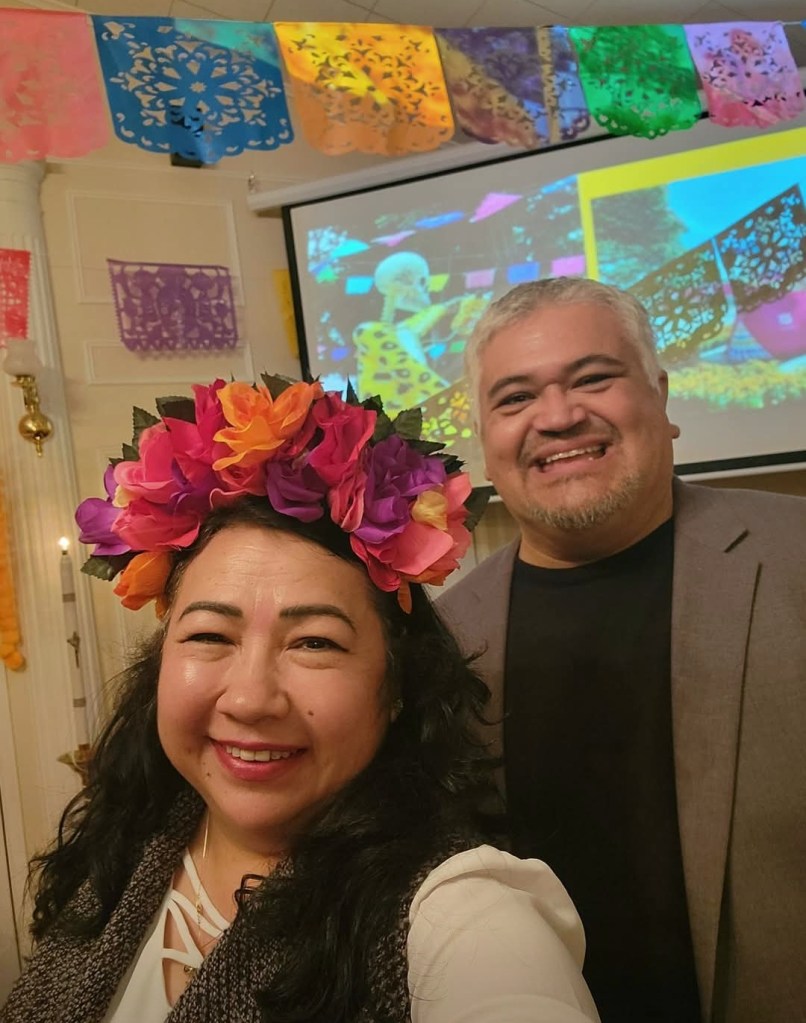
Aida Pantoja and Omar Palafox at Mexican celebration. Palafox teaches in the Department of Bible, Missions and Ministry at ACU. (Photos courtesy Aida Pantoja)
How the traditions differ
1. Religion and spirituality
In Mexico, many families attend Catholic Mass, pray for deceased relatives, visit cemeteries, light candles, and prepare ofrendas (altars with offerings). Indigenous spiritual traditions also play an important role in many communities.
In the United States, Mexican American families maintain these same practices, but many public celebrations are organized by museums, schools, churches, and community groups. Some emphasize cultural education and art more than religious observance.
2. Is it more solemn in Mexico?
Yes! The family and cemetery rituals can feel more intimate and personal. Families may spend hours decorating graves, praying, sharing memories, and sometimes eating together at the cemetery.
However, the atmosphere is not always solemn. In some places, there is music, laughter, dancing, and a strong sense of community. The celebration honors loved ones while embracing life.
3. Food and traditional offerings
Food is central in both countries, but regional traditions in Mexico can be especially distinctive.
* Pan de muerto: sweet bread often decorated with bone-shaped designs.
* Tamales and mole: foods commonly prepared for family gatherings and offerings in some regions.
* Atole and champurrado: warm traditional drinks.
* Favorite foods of the deceased: placed on the altar as a symbolic welcome.
* Sugar skulls and fruit: often used as decorations and offerings.
Recipes and offerings vary greatly by region and family.
4. Dances, music, and processions
Mexico has many regional celebrations that may include traditional music, community processions, folk dancing, theatrical performances, and elaborate costumes.
Oaxaca, for example, has distinctive community celebrations, including muerteadas—lively performances and processions that use humor, music, and dance to explore the relationship between life and death.
In the United States, celebrations often feature folklórico dancers, mariachi music, Catrina costumes, face painting, and parades. These are meaningful traditions, too, although some are presented as public cultural festivals rather than family or religious rituals.
Mexican Rituals and Ceremonies
The ofrenda is one of the most important elements in both countries. Families display photographs, candles, marigolds (cempasúchil), water, food, and personal belongings to honor their loved ones.
In many Mexican communities, the preparation is woven into family and community life. Families may clean and decorate graves, prepare special dishes, and pass traditions down to children and grandchildren.
One important difference: Mexico is not culturally uniform,
The traditions in Oaxaca, Michoacán, Mexico City, and northern Mexico can look quite different. Some Indigenous communities preserve very specific ceremonies, while urban celebrations may feature public displays, artistic installations, and large gatherings. The same diversity exists among Mexican American families in the United States.
Also, the holiday is not simply a Mexican version of Halloween. Halloween centers on different customs, whereas Día de los Muertos focuses on remembering and honoring the deceased and maintaining a connection with family members who have passed away.
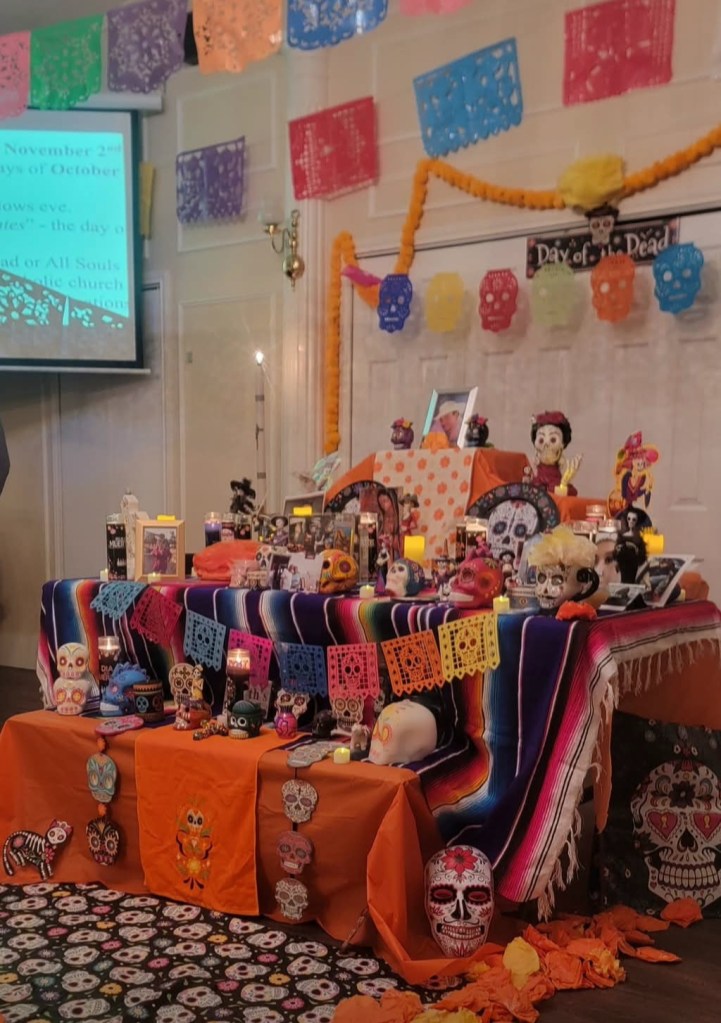
Traditional ofrenda
What this means for a Día de los Muertos celebration in Abilene
If you’re planning or participating in a community observance, you can honor the deeper Mexican traditions while still making the event welcoming and joyful.
Honor the spiritual meaning
Include a remembrance moment, a respectful ofrenda, candles or flowers, and an opportunity for families to remember loved ones. Religious elements can be included when appropriate to the event.
Share authentic Mexican food
Offer pan de muerto, tamales, atole, or regional dishes, and explain the meaning behind the food rather than presenting it only as festival fare.
Celebrate Mexican culture
Feature folklórico dancers, mariachi or other regional music, traditional crafts, and stories about the different ways Mexican communities observe the holiday.
Keep remembrance at the center
Invite families to share photographs, memories, or stories of their loved ones. This helps visitors understand that the celebration is about love, memory, family, and cultural continuity—not just costumes and decorations.
My biggest takeaway is this: Día de los Muertos can be both sacred and celebratory. In Mexico, the connection to family graves, home altars, and local traditions may be more visible in everyday community life. In the United States, public festivals often bring those traditions to a wider audience. Neither experience is inherently more authentic; both can preserve meaningful connections to Mexican heritage.
The most beautiful celebrations make room for both the joy of Mexican culture and the tenderness of remembering those we have lost.
Aida Pantoja is Educational Chair of the Grace Museum Board of Directors

