
Sacred Time
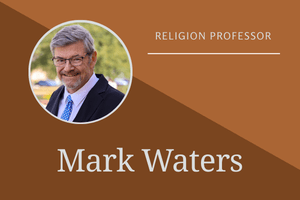
By Mark Waters
Advent is a season in the Christian calendar observed during the four weeks prior to Christmas. The word “Advent” means “coming” (Latin adventus). The season focuses on spiritual preparation and hopeful anticipation of the coming of Christ, his birth and return. One candle is lit during worship on each of the four Sundays prior to Christmas when the Christ candle is lit. This is an experiential way of marking sacred time. Themes of the Sundays vary, but Hope, Peace, Joy, and Love are typical.
A number of faith traditions have similar observances focused on remembrance, anticipation, and preparation for divine encounter. These periods of sacred time are set aside for spiritual formation, growth, and transformation. Of course, there is a sense in which all time is sacred time because God is always present. But here we are focused on designated seasons of spiritual preparation and renewal. What other religions share commonalities with Advent in selected observes of sacred time? Her are some examples.
Hinduism
Navarati is a nine-night observance celebrated four times per year. Practices and emphases vary in different regions of India. For example, devotees of the goddess Durga celebrate the triumph of light over darkness in remembrance of her legendary victory over the demon king Mahishasura. Practices include engaging in pre-dawn prayer, introspection, fasting, charity, and offerings of ghee (used for lamps) in anticipation of spiritual awakening.
In most expressions of Hinduism, deities like Durga are not separate gods as in polytheism. Rather, they are manifestations of Brahman, the one ultimate reality. Brahman is sometimes looked upon as the Consciousness of the universe and is comparable (remember similarity-in-difference) to the concept of God in monotheistic religions. Various Hindu sects understand Brahman in monistic, monotheistic, or panentheistic ways. I heard a Hindu priest say that God (Brahman) comes to individuals in ways they can understand. The many deities in the Hindu tradition are manifestations of Brahman in human-like forms, thus facilitating human connection with and understanding of the divine.
Judaism
Teshuvah is a forty-day period of self-examination, repentance, seeking forgiveness, and repairing relationships leading to the High Holy Days. The High Holy Days include Rosh Hashanah (the Jewish New Year) and Yom Kippur (the Day of Atonement).
When thinking of parallels with Advent and Christmas, some might ask, “What about Hanukkah?” This question assumes the false notion that Hanukkah is the “Jewish Christmas,” perhaps due to the time of year that Hanukkah is observed. On the contrary, it is a minor holiday celebrating the Maccabean victory in 164 BCE over the Seleucids and their leader Antiochus IV Epiphanes. It is not comparable to Christmas in emphasis or meaning.
Having banished the false notion about Hanukkah, the sacred time leading to the High Holy Days is comparable to Advent and Lent in their formative emphasis.
Islam
Sha’ban is a month in the Islamic lunar calendar. It functions as a time of spiritual preparation for the following month, Ramadan. Ramadan is the month in which Muhammad began reciting the Quran under the inspiration of the angel Gabriel. Sha’ban and Ramadan are times of anticipation and observance as is Advent. They culminate Eid al-Fitr, celebrating the end of the fast. Eid is an expression of gratitude to God and care for one’s neighbors. Zakat al-Fitr is obligatory charity during this sacred time so poorer members of the community can participate fully in the festivities.
These examples serve as a reminder that the human search for meaning, transformation, and encounter with the divine is not unique to any one faith tradition. While Advent is distinctly Christian in its focus on the coming of Christ, other faith traditions also recognize the importance of setting aside sacred time for reflection, preparation, repentance, renewal, and hope. Such similarities should not obscure the significant differences among religions.
Similarities are better described as “similarities-in-difference,” but they can deepen our appreciation for the diverse ways human beings seek connection with ultimate reality. By learning how other traditions mark sacred time, Christians may gain a richer understanding of Advent, a season that invites us to slow down, open our hearts to God’s presence, and prepare ourselves for the coming of Christ, including the many ways he comes to us in the sacredness of each day.
(This article is my personal analysis and does not necessarily reflect the position of my employer.–Mark Waters)
Mark Waters is professor of religion at McMurry University and Dean of the College of Liberal Arts and Education.

