
‘In Remembrance of Grover Everett’
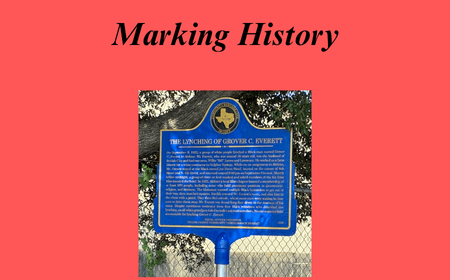
Click here to read a story about a 2019 project commemorating the site of Grover Everett’s death. The Community Remembrance Project was sponsored by the Equal Justice Initiative to bring attention to the history of violence against Blacks. It involved gathering soil from the site of Everett’s murder to place in one-gallon jars for display in two museums.
By Loretta Fulton
“We gather today to remember,” Amy Boone, the leader of dedication ceremony, read from a printed program.
“We come to bear witness,” the crowd responded.
A large gathering of Abilenians turned out Saturday morning, June 20, to bear witness to the “Remembrance of Grover Everett.” A marker was dedicated across the street from the site where Everett was murdered on Sept. 9, 1922, at the hands of “masked and robed men.” Everett, a Black man from Sulphur Springs in East Texas, was working in Abilene and staying the Joe Davis Hotel for “negros” at the corner of North 4th and Ash Streets. On the night of Sept. 9, 1922, he was shot to death in his room. His body was found in the doorway. An all-White grand jury failed to indict anyone for the murder.
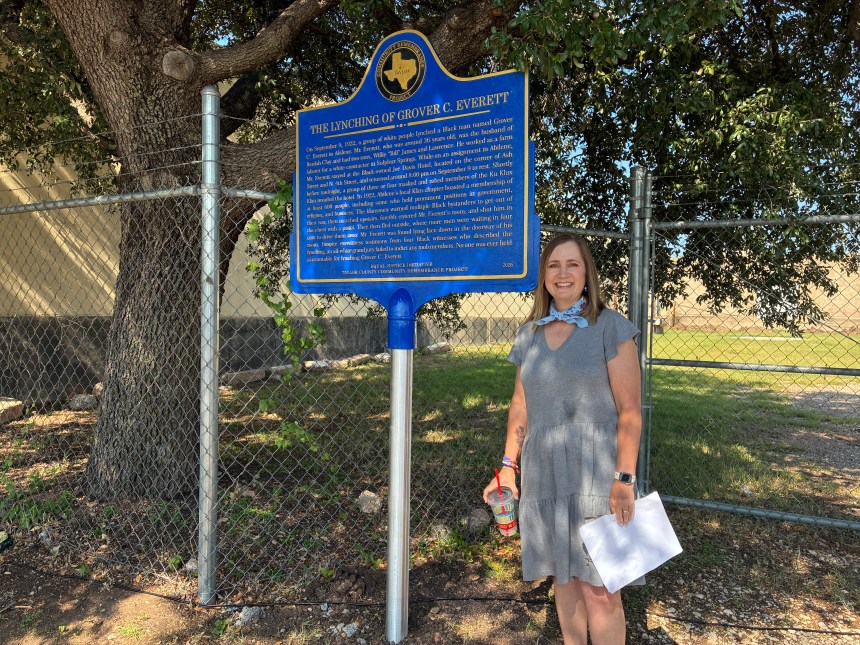
Amy Boone with Grover Everett historical marker
“No one was ever held accountable for the lynching of Grover C. Everett,” said Malcolm Scott, a program participant. Scott is president of the local chapter of the National Association for the Advancement of Colored People (NAACP) and teaches in the School of Social Work at Abilene Christian University. “Lynching” is defined by the NAACP as any violent death by a mob, not just by hanging.
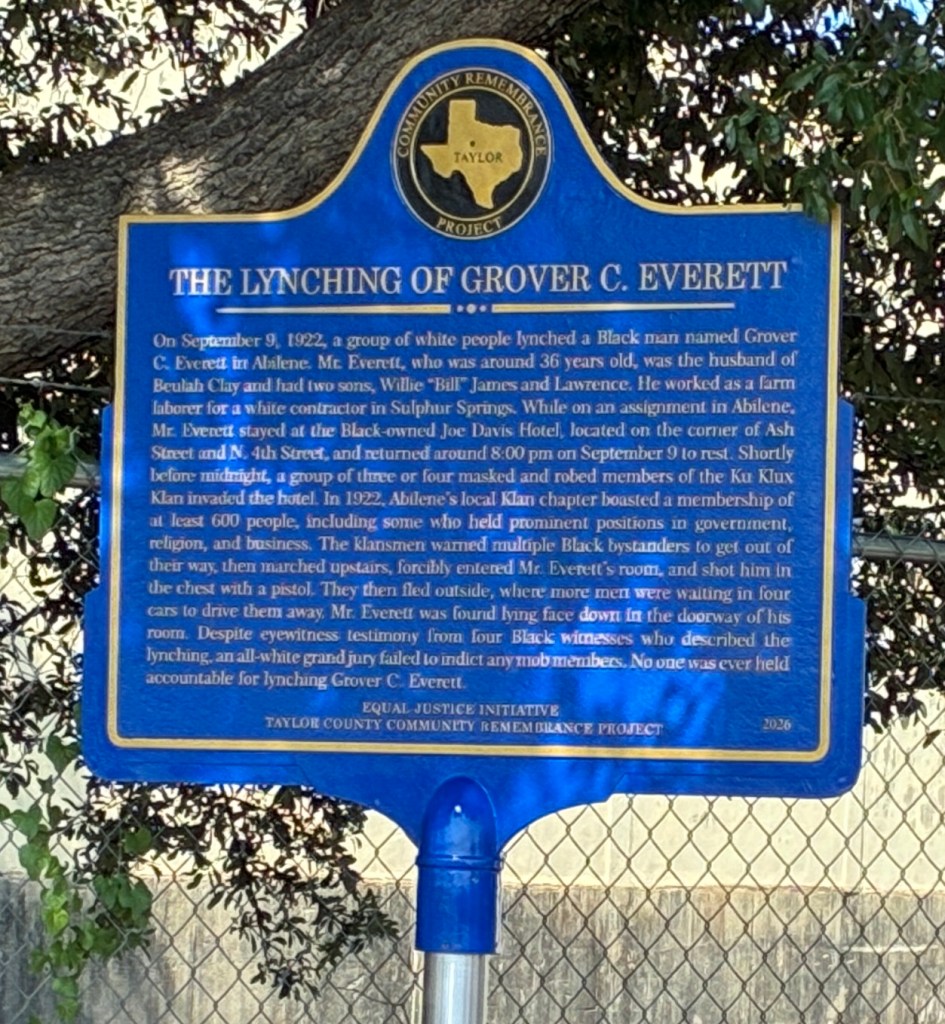
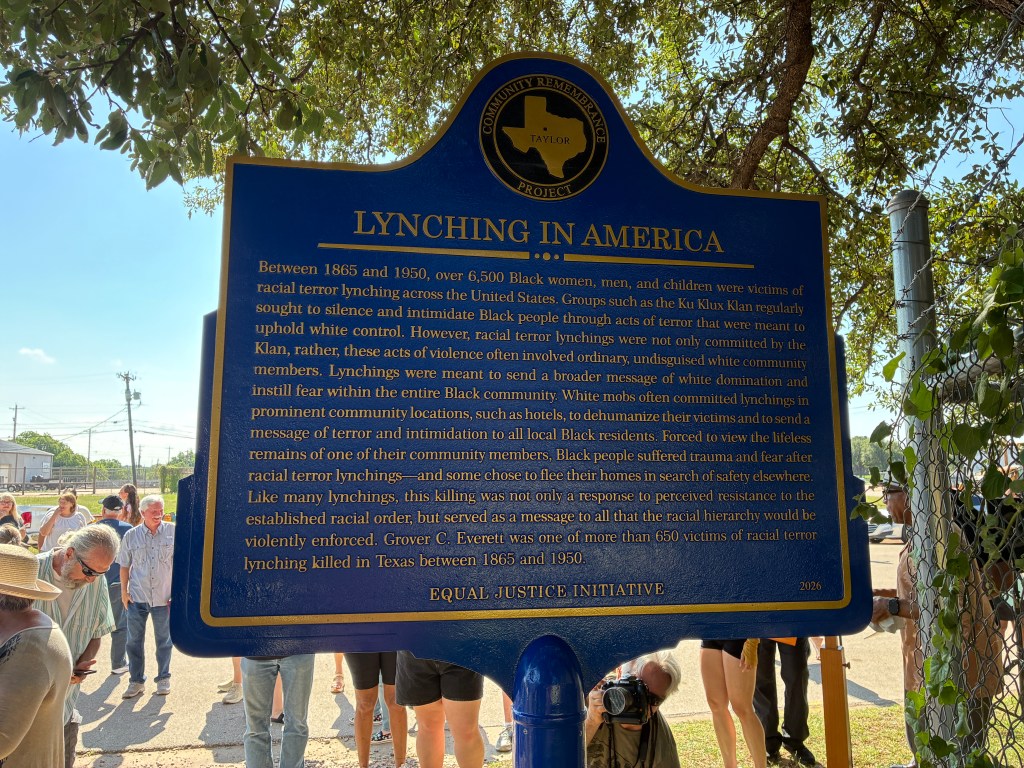
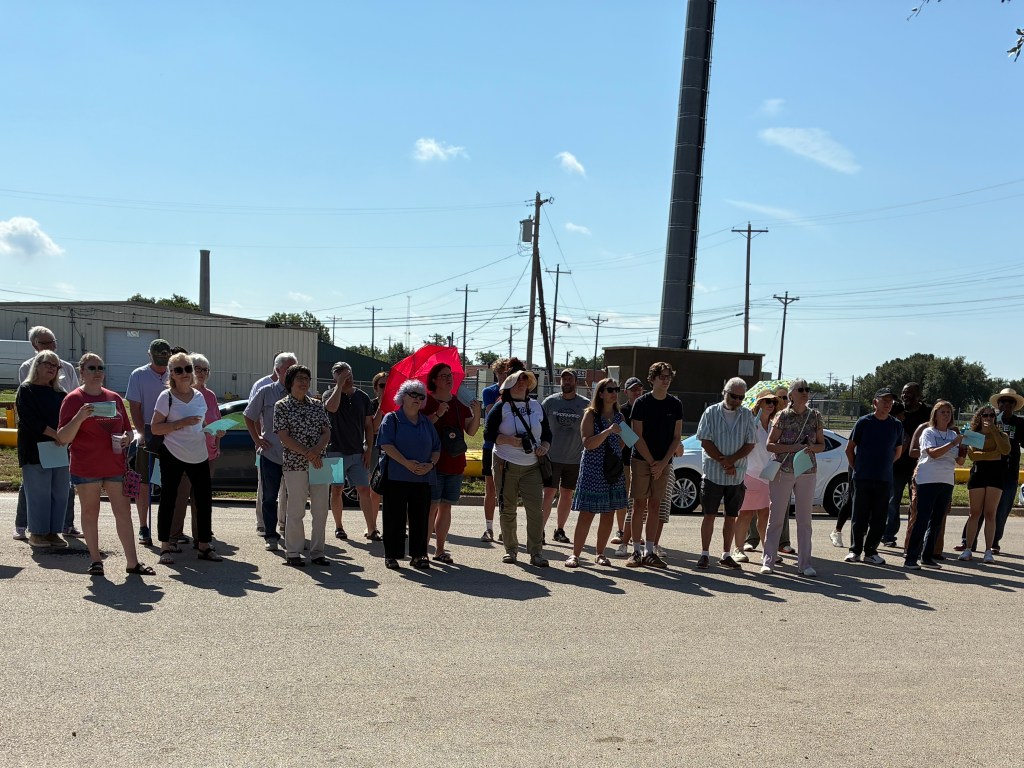
Front and back of marker noting the murder of Grover Everett on Sept. 9, 1922. At right, a crowd gathers to watch the dedication.
Saturday’s marker dedication was the result of the efforts of local residents and the Equal Justice Initiative in Montgomery, Alabama. In 2019, The EJI sponsored a Community Remembrance Project at the actual site.
More than 100 people gathered in April 2019 to collect soil in two one-gallon jars. One is displayed at the Curtis House Cultural Center, 630 W.N. Washington St., and one was taken to the EJI’s museum in Montgomery by students in Dr. Robert Wallace’s sociology class at McMurry. Since then, ongoing efforts have been made to get a marker installed. The historical marker was provided by the Equal Justice Initiative.
“This marker is now a reality,” Boone said.
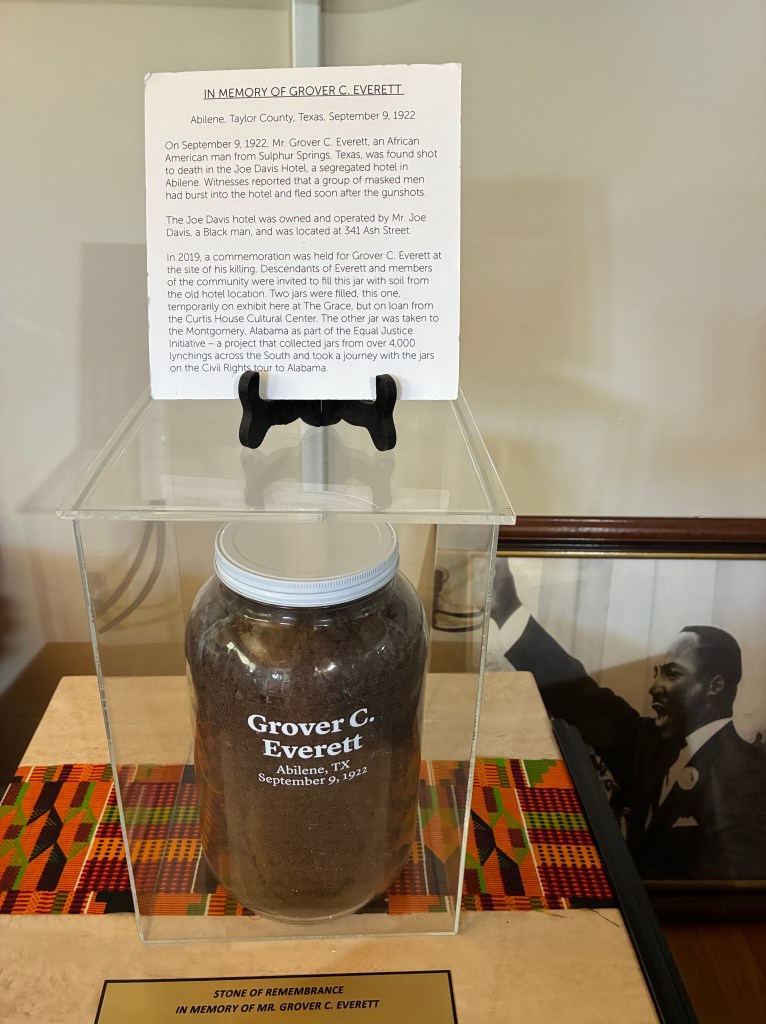
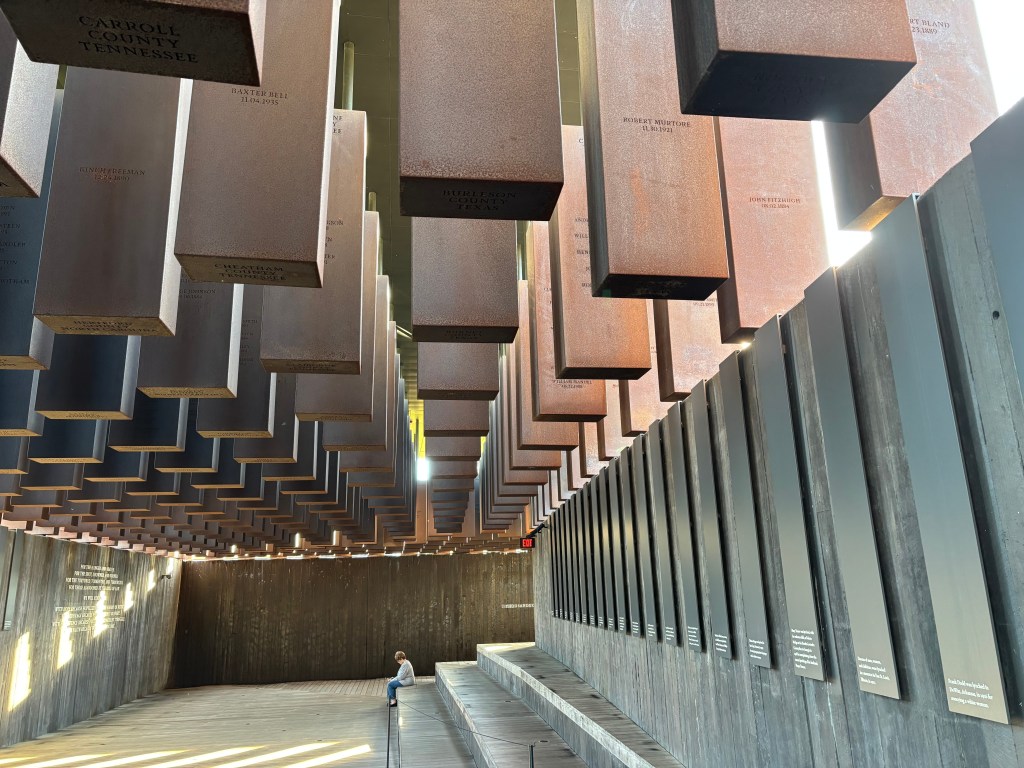
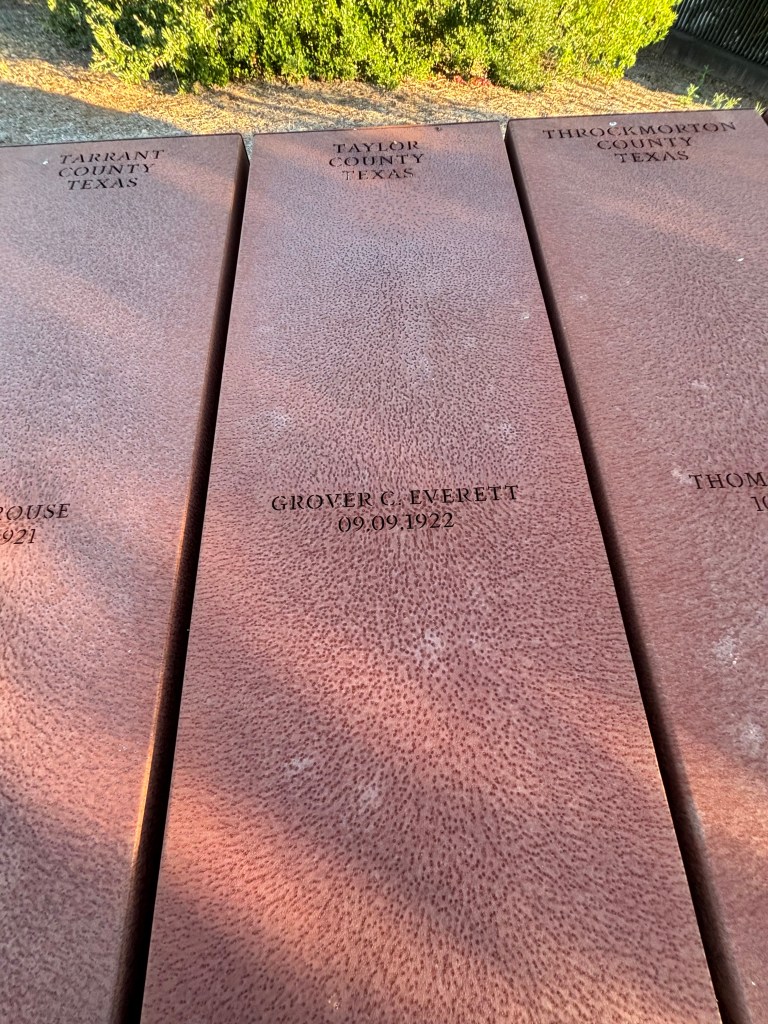
At left, jar of soil from the site where Grover C. Everett was murdered in 1922 stored in Curtis House Cultural Center in Abilene. Second photos are from the Equal Justice Initiative museum in Montgomery, Alabama. The center photo shows hanging markers replicating lynching. Right photo is of the Grover Everett marker. EJI Museum photos courtesy Mary Glover
She gave a special thanks to Madie Loeffler (property owner contact), Jon Brokaw (installation), Hannah Davis (photography), and Curtis House. Taking part in the ceremony were Scott and Jane Anne Carroll, who read the words from the marker, music by Johnny Woodfaulk, Jeremy Jay, and Susan Petty, Terrance Penns, director of Curtis House Cultural Center, and Rev. Andrew Penns, pastor of Valley View Missionary Baptist Church and founder of Curtis House.
“We have come a mighty long way,” Andrew Penns said in his closing prayer. “We still have a might long ways to go.”

Loretta Fulton is creator and editor of Spirit of Abilene
 Spirit Of Abilene