
Sharia: The Path to the Watering Hole
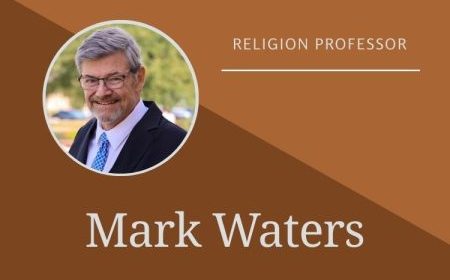
By Mark Waters
Recent political discourse is characterized by extreme misunderstanding or intentional distortion of the Islamic concept of Sharia. Lawmakers in Texas created a “Sharia-Free America Caucus” in Congress. Lt. Gov. Dan Patrick asked the State Senate to consider legislation ensuring that Texans “are never held under the heel of ‘Sharia law.’” Attorney General Ken Paxton plans to investigate a proposed real estate development in Kaufman County as a “potentially illegal ‘Sharia City.’” These politicians are not alone. Their sentiment is widespread (Texas GOP Turns to an Old Enemy, Islam).
Clarification is needed. As a religious studies scholar, the political statements above strike me like a claim that the sun revolves around the earth might strike an astrophysicist or the assertion that smoking is good for one’s health might be received by a medical doctor.
In order to understand this concept better, we’ll examine three principles, Sharia, Fiqh, and Fatwa. The word “Sharia” is literally translated “the path to the watering hole.” As a metaphor, it indicates a path to move toward that which is life-giving like water. Imagine the significance of water for ancient people living in the Arabian desert. This use of “path” reminds me that, before the word “Christian” was applied to followers of Christ, they were known as followers of “The Way.” The two metaphors are twins, or at least siblings, in their descriptive function. Both religions are dedicated to following a way or path to demonstrate and develop faithfulness to God.
Our next step is to understand that the path to the watering hole is a “law” in the sense that it describes expectations of faithfulness for Muslims. But we miss the entire point if we fail to recognize that these “expectations” are interpreted and adapted to different cultural settings or time-periods through Islamic jurisprudence. Jurisprudence is primarily drawn from the Quran and multiple volumes about the Prophet Muhammad’s life, sayings, and actions called Hadith. Hadith, which can be plural or singular in English, are ranked authentic, good, or weak. Their authority is partial, not absolute like the Quran. Moreover, even the Quran must be interpreted by various scholars or schools of scholars.
There are two primary branches of Islam. Shia and Sunni. Shia, constituting about 15% of all Muslims worldwide although in the majority in Iran and Iraq, has branches that recognize various historic Imams in the family line of Muhammad. The largest branch is called Twelvers because they recognize 12 Imams born between 599 and 869 CE. Iran, for example, is predominately populated by Twelver Islam. Consequently, the historic Imams have absolute authority in their teachings about the Quran. They are considered infallible. Highly learned scholars, called Ayatollahs, considered fallible but with significant authority, interpret the Imams’ teachings for modern times. Because the twelfth Imam, Imam Al-Mahdi, is believed to be in a state of occultation (hiding), Ayatollahs provide guidance for the community. This contrasts with the Sunni tradition, where the term “Imam” refers to a local prayer leader who provides community guidance and leads prayer in the mosques, without a claim to divine descent or spiritual infallibility.
Sunni traditions, constituting approximately 85% of Muslims worldwide, are guided by four schools (known as madhhab) of scholarly interpretation. These schools offer a range of methodologies for understanding the Quran and the life of the Prophet: (1) the Hanafi school is the most prevalent in South Asia and Turkey, placing a high value on independent reason and juristic discretion. This school is flexible and particularly adaptable in diverse cultures. Custom and public interest are additional sources of law; (2) the Maliki school, dominant in Africa, emphasizes the historical traditions of the people of Medina. According to “The Four Sunni Schools of Law” in the publication Law Article, the Maliki school is “responsive to regional norms…[and] recognizes public welfare in legal decisions where no clear textual guidance exists.” (3) the Shafi’i school is prevalent in Southeast Asia, Yemen, and East Africa. They value scholarly consensus and observation of the life and devotional habits (Sunnah) of the Prophet. Sunnah includes things like fasting regularly, eating only with one’s right hand, sleeping on one’s right side, frequent tooth cleaning, smiling as a gift to others, and a variety of other daily activities; and (4) the Hanbali school, which holds the most traditional and literal interpretations. The smallest school globally, this is the primary school in Saudi Arabia (The Four Sunni Schools of Law).
A 2021 article in Religious News identifies Hanafi and Shafi’i mosques as the most common in America. Maliki mosques are increasing here. Freedom for women and interfaith collaboration are on the rise among Muslims in the U.S.
Understanding these distinct paths is crucial for recognizing that Sharia is not a monolithic, one size fits all form of jurisprudence. Moreover, much of religious life is centered on personal character and daily routines rather than the negative stereotypes often found in modern discourse.
This brings us to the terms Fiqh and Fatwa. Fiqh is the human attempt to understand and implement Sharia (the divine path) through the study of the Quran and Hadith. When a specific question arises about how to navigate a modern issue, a qualified scholar (known as a Mufti), consults the established rules of their school of thought (Fiqh) to issue a Fatwa. A Fatwa is a formal legal opinion or scholarly response to a specific question. Fatwas are typically nonbinding because they are considered human interpretations. How binding they are in reality, however, will vary by nation and culture. A Fatwa issued by the Grand Ayatollah in Iran will be more binding on the citizens of that nation than a Fatwa applied to an issue in the U.S. Very few Muslims in the U.S. would consider a Fatwa issued by the Ayatollah to apply to them.
The above explanations reveal how inaccurate it is to claim anything about Sharia in general. Sharia will look quite different among U.S. Muslims, frequently associated with the progressive Hanafi school that emphasizes reason and personal opinions, than Sharia in Saudi Arabia associated with the Hanbali school or Sharia derived from a Fatwa issued by the Grand Ayatollah in Iran. A simple example of how this might work in the U.S. would be the permissibility of a Muslim getting a home loan when the Quran forbids charging interest. A Fatwa in this context would distinguish between what is permissible in a Muslim-land and a non-Muslim land.
In light of the previous information, how might one describe Sharia in the simplest terms? Though most everything in life is more complex and nuanced than it appears on the surface, the basic idea is that a Muslim in the U.S. would follow Sharia by keeping the Five Pillars of Islam: 1. profession of faith, 2. prayer five times a day, 3. giving generously to people in need, 4. fasting during the month of Ramadan, and, if possible, 5. going on the Hajj pilgrimage to Mecca at least once in a lifetime. In addition, one would follow Sharia in marriages, funerals, buying houses, donating organs after death, entering contracts with other Muslims, and so on.
So, relax. Sharia in the U.S. cannot and would not replace the Constitution, which is not the nature of Sharia as it is lived here in the first place, and it would be against both the establishment and free-exercise clauses of First Amendment. Frankly, at the present time, we are much more at risk for the imposition of a White Christian Nationalist government than the “risk” of Sharia could possibly be. Admittedly, things are different in places like Iran and Saudi Arabia. But do not confuse Sharia there with Sharia here! Once we know this information, politicians will be less able to use fear of Sharia to manipulate us and to demean our Muslim siblings.
The Quran emphasizes justice, kindness, and respectful engagement with others. Believers are instructed to act with fairness and excellence (Quran 16:90), to speak with wisdom and gentleness (Quran 16:125), and to honor the dignity of every human being (Quran 17:70). These teachings echo the same moral principle found in the Golden Rule: treat others as we wish to be treated. We want others to have an accurate understanding of our faith rather than preconceived stereotypes. The Golden Rule requires that we do no less for people of other faiths, including Islam.
(This article is my personal analysis and does not necessarily reflect the position of my employer. The article does reflect academic consensus–Mark Waters)
Mark Waters is professor of religion at McMurry University and chair of the Division of Humanities, Religion, and Social Sciences
 Spirit Of Abilene