
Twisting the Text: A Call for Responsible Interpretation
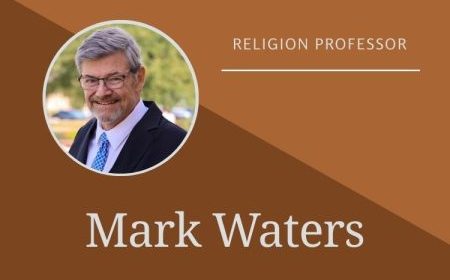
By Mark Waters
A March 3rd article in military.com and multiple other sources stated that “a combat-unit commander told non-commissioned officers at a briefing Monday that the Iran war is part of God’s plan and that President Donald Trump was ‘anointed by Jesus to light the signal fire in Iran to cause Armageddon and mark his return to Earth’.” By that time, the Military Religious Freedom Foundation (MRFF) had received more than 200 complaints across 50 military units about religious infringement by commanders (The Guardian). If these complaints are accurate—credible reports indicate that they are—then these commanders are likely at odds with the First Amendment of the U.S. Constitution and the Uniform Code of Military Justice. I use the qualifier “likely” rather than implying certainty because I’ll leave it to military officials to determine actual infractions.
Rather than legal or political considerations, this article focuses on biblical interpretation. By so doing, I’ll stay in my lane which includes religious, theological, and biblical interpretation.
Dominant scholarly consensus is that The Revelation to John is apocalyptic literature, a popular genre in the Second Temple Period of Judaism and early Christianity. First-century readers would have been more familiar with the genre than we are today. Thus, the incredibly symbolic and metaphorical language would have communicated powerfully to the people of that time, but would not have seemed as bizarre as it does to modern readers. The tendency of some modern readers to take the symbols literally or try to connect them to 20th or 21st century events would seem nonsensical to ancient readers. The book of Revelation is about Roman persecution of Christians in the first century and Christian hopes for vindication and rescue. It is not about current events today.
A funny yet disturbingly bad example of modern interpreters connecting ancient symbols to the current day is The Late Great Planet Earth by Hal Lindsey written during the days of the cold war with the Soviet Union. I was in high school. Lindsey claimed that the locusts of Revelation 9 were Soviet attack helicopters. Even as a high schooler, that book seemed to miss the mark when our Fellowship of Christian Athletes director spent several weekly sessions reading and “explaining” it to us.
Apocalyptic literature like Daniel, Enoch, and Revelation was composed during periods of persecution and, as already noted, designed to provide hope for faithful people during difficult and dangerous times. The word itself is from the Greek apokálypsis, which refers to an unveiling, disclosure, or revelation. In the case of The Revelation to John, the disclosure was about the defeat of enemies of Christianity, especially Imperial Rome and Christ’s ultimate triumph over evil. A triumph so complete that it implied a new heaven and a new earth. They expected imminent victory and deliverance.
I’ll not attempt to identify the many symbols in the book, but here are a few interesting examples. People with 666 in their phone number will be relieved to know that the biblical version of 666 is an example of gematria, the use of letters to represent numbers. Though not technically gematria when using Roman numerals, think of IX, V, VII, LX, et cetera and you’ll get the basic idea. In Hebrew letters, 666 spells “Nero Caesar.” Although Nero was dead and Domitian was probably emperor when Revelation was written, Nero represented Roman Imperial power and persecution embodied in any emperor. Armageddon is a reference to the Mount (Tel) of Megiddo, a site near Haifa, Israel, known historically for a number of battles and, consequently, represents the battle depicted in Revelation. The mark of the beast is a metaphor for complicity with Rome, particularly imperial worship (Revelation 13). In addition, coins bore the image of the emperor, the “mark of the beast.” One typically had to use the idolatrous “graven image” of the emperor in order to “buy and sell” (Revelation 13:16-17). The mark on the forehead and hand was not literal, but did bring to mind the phylacteries (a small box with a scripture inside and leather bands to secure it to the person) worn on the forehead and hand by faithful Jewish men, still worn by Orthodox Jews, occasionally by Conservative Jews, and rarely by Reform Jews today (Deuteronomy 6). No worries whatsoever about microchips in Covid injections, digital currency, or other ridiculous conspiracy theories.
By now I’m confident that you get the point. Most of you already did. Whether you like or dislike Trump politically, he is not God’s anointed one to start Armageddon through the war with Iran and usher in the second coming. As our Orthodox Christian friends teach, war is always evil even if sometimes necessary in a sinful world. And there are multitudes of reasons to question the “necessity” of this war. Some of those spreading conspiracy theories about Armageddon are true believers. Others are pragmatic politicians—play-like Christians—who know how to manipulate people who don’t think critically. It amazes me that there are otherwise intelligent people who lose their ability to think critically when it comes to religion. There is nothing faithful about a refusal to think. There is nothing faithful about a refusal to ask penetrating questions. A poster from years ago in my local church said, “Jesus came to take away our sins, not our minds.”
(The views expressed in this article are mine and not necessarily those of my employer or colleagues.)
Mark Waters is professor of religion at McMurry University and chair of the Division of Humanities, Religion, and Social Sciences
 Spirit Of Abilene
The political and religious climate of today’s world is extremely volatile and often hostile. You couldn’t be more correct in cautioning people about presenting their own views as the views of God.
LikeLike