
Parables to Ponder

By NANCY PATRICK
My pastor, Brandon Hudson, at First Baptist Church Abilene has recently preached a series of sermons based on Jesus’ parables. He always projects on the wall a thoughtful quote at the end of his sermons as he sits down to give us time to read and digest the message.
Jesus used parables as teaching tools to help his disciples better understand his mission and their roles in it. The stories, though simple, symbolize our modern world’s view of success—one that values power, wealth, political allegiance, and outward appearance over simple spirituality.
A recent quotation came from Gregory Boyle, founder of Homebody Industries and author of Tattoos on the Heart. Boyle’s work with gang members culminated in his mission to rehabilitate these “lost souls” and bring them back into a non-criminal society.
He continued, “The way is narrow. But really it wants us to see that narrowness is the way … . It’s about funneling ourselves into a central place. Our choice is not to focus on the narrow, but to narrow our focus.”
He continued, “The narrow way leads to a gate not about restriction at all. It is about an entry into the expansive. There is a vastness in knowing you’re a son/daughter worth having. We see our plentitude in God’s own expansive view of us.”
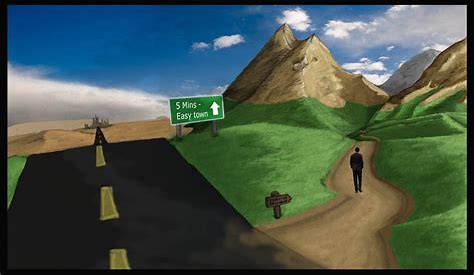
Mattthew 7:14 says, “But small is the gate and narrow the road that leads to life, and only a few find it” (NIV). Many other passages in the Bible refer to the spiritual ability to find a way to an abundant, joyful, rewarding life that pleases God. Evidently, more people prefer the wider paths in life that please them rather than the narrow, more challenging ones.
Boyle’s words indicate that the narrowness of the path that pleases God does not emphasize restriction but focus—focus that narrows the important aspects of life rather than the material, political, affluent lifestyles that glitter, sparkle, and entice so many people to enjoy what they perceive as the “good life.”
When we examine Jesus’ own lifestyle and that of his disciples, we find no exorbitant salaries, mansions, Rolls-Royces, elite schools, designer clothes, or Rolex watches. Jesus neither condemned affluence as evil, nor did he imply that to please God we must starve ourselves and wear rags. The narrow focus sees the world around it and all those in it.
We know that large cities experience the problems of homelessness; Abilene also faces this challenge as well as issues of poverty and mental illness. We see natural disasters destroy people’s material lives as well as their physical lives—floods, hurricanes, fires, and tornadoes wipe out an entire life’s work in an instant.
I know I cannot fix these problems around the world, but surely, I can find ways close to home to contribute to those shattered lives. The ability to contribute to the narrow focus involves the realization that everyone has value and worth—those in power, those living affluent lifestyles, and those who lie on street corners or in the shades of awnings of abandoned buildings.
Many churches and other organizations play important roles in helping us take our focus off the ambition, drive, greed, lust, and envy that fuels the wide road. The Salvation Army in Abilene stands on Butternut Street, ready to feed, clothe, and house those in distress.
Can we not supply fans to cool those who do not have air conditioning? Can we not fund ministries that work on the many narrow roads all the time?
Some well-known ministries in Abilene include Habitat for Humanity, Breakfast on Beech Street, counseling ministries, City Light of First Baptist Church, and Love and Care Ministries. That list is not inclusive; for a city of Abilene’s size, it offers a large range of social assistance to those in need (Abilene, TX Assistance Programs | TheHelpList.com).
Why do so many people avoid the narrow way? Louise Penny in her novel A Better Man examines the human psyche to probe the levels of our perceptions of circumstances. In the book, a father whose daughter has died in a flooded river, blames his son-in-law for her death. He could not accept the reality of his own abuse of his daughter her entire life.
Penny suggests that the combination of truth and malice can create a putty that fills all the flaws in our brain’s understanding with “subtle demonisms of life and thought.” We can project to the world the appearance of peace, happiness, satisfaction, and kindness; however, under that appearance lives a mind infected with evil thoughts, desires, bitterness, and cruelty.
This reality walks the wide road populated with those whose goal is to achieve status in the competitive world. Penny suggests that this twisted reality “intertwines malice and truth,” making them indistinguishable, a dangerous state of mind in which to live.
Nancy Patrick is a retired teacher who lives in Abilene and enjoys writing
 Spirit Of Abilene
Very good article Nancy! You put a lot of thought and work into that and it made me wonder what more I could do around here to help people out. We have a Ministry at church that people can call and see if they qualify for food or financial help. I donate to it but there’s not much else around here that we can do that I am aware of. Thanks for a very thought-provoking article. I I Love you and I sure wish we could get together for a visit.
LikeLike