
Wars and More Wars

Click here to read an accompanying piece by Mike Patrick about a chaplain at the Nuremberg trials.
By Nancy Patrick
If history had interested me more in my student days, perhaps I wouldn’t feel so deficient in understanding many of today’s global issues. Because of this lack of knowledge, I find myself researching topics that I should have known more about before this time in my life.
One of those topics spotlights World War II. Ironically, I belong to the Baby Boomer generation that followed that war. My dad and uncles served during that period, but I didn’t take advantage of their knowledge when I had the chance.
I did, however, immerse myself in WW II history by watching the Foyle’s War series on BBC. The historical accuracy in the drama prompted me to do additional research to learn more about some of the incidents dramatized in the series.
The series follows the entirety of the war, including references to the Nuremberg trials which took place in 1945-1946 in Nuremberg, Germany. The trials’ global significance stands prominently as the world’s first attempt to hold to accountability people and governments responsible for war crimes, crimes against humanity, and crimes against peace.
A new film entitled Nuremberg debuted on Nov. 5, 2025. The movie stars Rami Malik and Russell Crowe and offers a somewhat different perspective on the Nazi criminals on trial. I want to see the movie, but I want to know more about the historical case before I see it.
I found an extremely informative documentary that I recommend to anyone who needs a better understanding of the nature of war and international standards by which the world judges them (Documentary). In fact, many wars and similar conflicts battle as I write this essay.
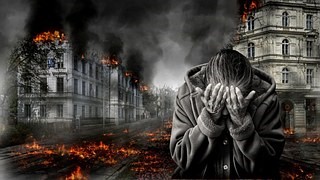
The old expression “all’s fair in love and war” may sound cute, but it actually repudiates truth. On the contrary, many war events pervert the tenet of fairness. Just as adultery violates the principles of trust and fairness in marriage, so wars illustrate the cruel, inhumane, hateful, brutal, merciless, sadistic, and atrocious behavior of war.
War does have a “book of rules.” Rules of war differ from civil and domestic law which usually have their foundations in various cultures.
However, rules of war have a much broader base and involve international considerations such as justification for conflict, weaponry, treatment of prisoners of war, and recognition of human dignity. Many of these rules originated after WW II in a code of conduct called the Geneva Conventions (Geneva).
If you read these rules, you will easily identify modern violations in various conflicts around the world. Most recently we have witnessed war crimes in Gaza and Ukraine; however, if we look at our own recent history, we can recall appalling incidents involving massacres and the torture of prisoners.
I think this topic has preoccupied my mind so much lately because I have witnessed extreme behaviors by people around the world. This tendency toward brutality does not limit itself to one culture. Most who witnessed the Hamas attack on Israeli citizens attending a popular concert on Oct. 7, 2024, agree that the attack was unprovoked and brutal.
For many, the starvation and genocide of civilians in Gaza represents war criminality. Starvation and genocide still occur in places like Darfur and Somalia. Many observers cannot understand how this kind of atrocity can occur. We wonder how some people seem immune to the suffering of others as they continue their daily lives.
As I watched the documentary about the Nuremberg trials, the common factor most often mentioned by the defendants related to their allegiance to Adolf Hitler. He had a charisma that could command total obedience to his programs to create a perfect German world. Many claimed not to have known about the Holocaust and certainly did not participate in it.
Only a few of the defendants ever acknowledged their wrongdoings and fewer still expressed regret and shame for their roles in Hitler’s vision. As I watched some of the films, I couldn’t help but think of all the people in the world duped by charismatic leaders who convince them to drink the Kool-Aid or perish in the Waco inferno.
I would like to believe that people learn from history and refuse to repeat the errors of their ancestors. Alas, I find that not the case. Rather than becoming more humane in our treatment of fellow human beings, we run a race to see which nation can create a biological weapon or virus with which to obliterate its enemies.
Truly, I wish I could find a Bible verse that reassures me wars will end and nations will live at peace with other nations. Unfortunately, the Bible has many references to the ongoing nature of war and the inability of people to live amicably with each other. Even so, Matthew 5:9 says, “Blessed are the peacemakers, for they will be called children of God.”
Nancy Patrick is a retired teacher who lives in Abilene and enjoys writing
 Spirit Of Abilene
Pingback: Chaplain at Nuremberg | Spirit Of Abilene