
Those Ahead of Us

By Jim Nichols
The transition from elementary school to junior high was not a smooth one for me. It was significantly complicated by having to ride the school bus every morning. Hickory Grove Elementary was within walking distance of my home, but the junior high required Bus #38 to pick me up at the corner. My grade was the youngest on the bus and everyone else seemed bigger and stronger than I in addition to being unknown to me. Every morning was scary.
A turning point occurred about three weeks after the beginning of the school year. Nervously staring at the gravel in the street as I waited for the bus, I looked up as it stopped and I saw through the window a face I knew. I had not seen him on the bus before, though he had been there, but I recognized him as another boy from my elementary school. I knew somebody on this bus! He was going the same place I was! We were on a journey together!
It does not take much to change the heart of a twelve-year-old, but that face through the window altered my school year.
A man visiting in another country wanted to cross a busy street filled with horn-honking cars and trucks. Unsure about the traffic etiquette there, he waited until he spied someone who appeared to be a native of that city. Unknown to the other person, the foreigner attached himself to the native and crossed when he did. Connecting with someone knowledgeable and familiar is a key to safety, just like in seventh grade.
Visiting another country creates problems like this that are complicated by language differences—particularly if the language does not use letters shaped as in English. If one cannot come close to cognates for English, boarding the correct subways, trains, or even telling which direction they are going is a challenge. As an aside, this is a good reminder to us to understand the struggles of a refugee or foreigner in our country.
There is a clear theme we should not miss. Our fears are lightened if we can find (and attach to even casually) someone who has made that journey before.
Many of us have, for example, visited a church that is not our own. Either we do not attend church much or we attend another one. Even though the overall atmosphere seems accommodating, we still do not know the patterns. When do we stand? Kneel? Clap? Sing? Shake hands and greet others? When to pray or read aloud? Our remedy, of course, is to act like we know what is going on. We turn into church stowaways and try to blend in. This is not a criticism, it is just the way we commonly behave.
As our birthdays accumulate, we realize there are fewer and fewer people around us who are older than we are. Just look at all those young people on television or in any commercials. Must we admit that our bodies are wearing out? I do not like spending so much time and effort on my physical body. It has been my friend for decades and now seems to be failing me. How do I find my way through this?
To repeat, our fears and concerns are lightened as we find others who have made that journey before. Specifically, there are others who have aged before we have.
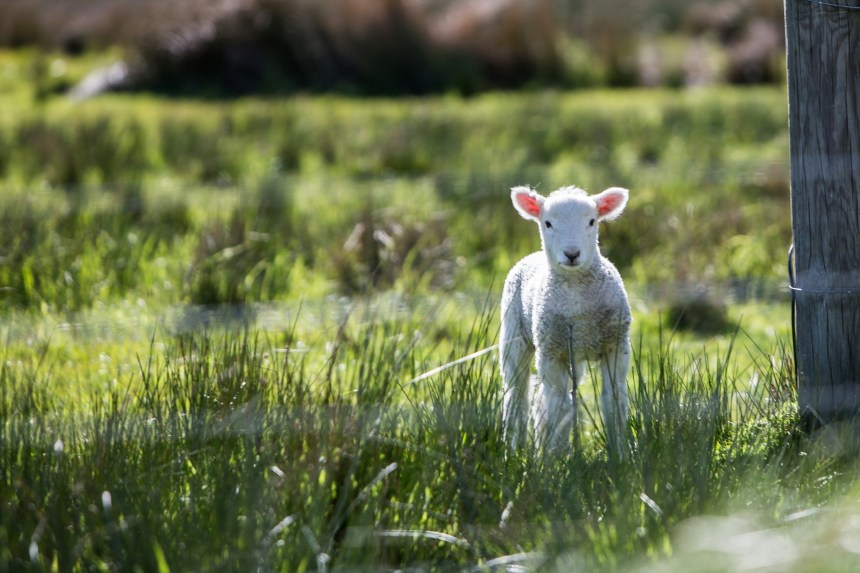
Photo by Rod Long on Upsplash
For followers of God, there is one other important feature—we can remember that we are sheep.
In scripture, there are many words about sheep and shepherds. Despite the lack of personal experience of most of us with sheep, we understand the concept. Sheep follow a shepherd. The shepherd’s role is to care for the sheep by protecting and guiding them. The shepherd apparently can see some things because of experience and can use that knowledge to aid the following sheep. In chapter ten of the book of John, Jesus is described as the great shepherd. The words are clear that Jesus does not just open the gate but goes through the gate first and then the sheep follow. The sheep know his voice and follow his example because he is not a stranger. He has gone ahead of us.
Jim Nichols is a retired Abilene Christian University biology professor and current hospital chaplain
 Spirit Of Abilene