
Learning a New Lexicon

By Nancy Patrick
About two years ago, a friend asked me what “woke” meant. It just so happened that I had learned the new usage a couple of weeks before when I had read a magazine article about it.
Modern language contains many new words and usages. As an English major and former English teacher, I find anything related to language arts interesting.
I decided to do a little research about some of the terms I’ve learned in recent years. Although some are not really new, their usage has grown and mutated over the years.
The familiar words “wake” and “awake” traditionally refer to one’s awareness as in consciousness rather than a state of sleep.
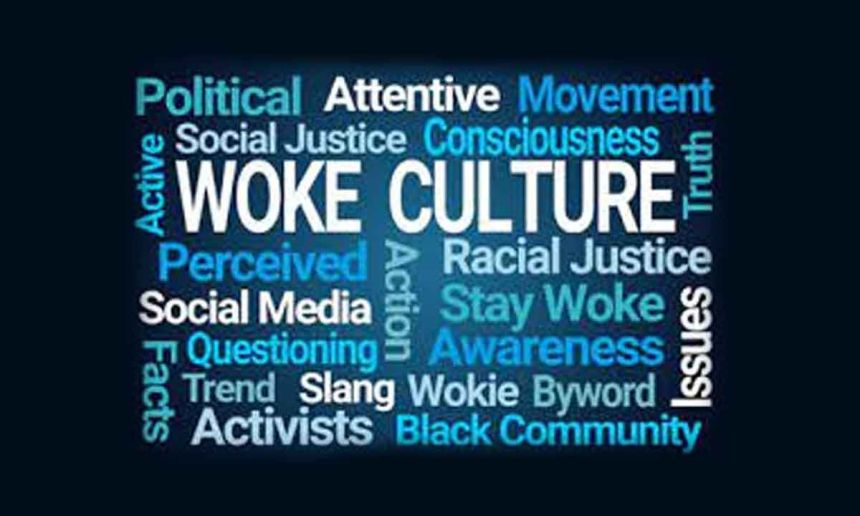
In today’s political world, “woke” denotes a new slang word referring to terms and phrases that relate to social justice movements, particularly those that focus on issues of race, gender, identity, and equality” (Woke). Based on the definition, I considered myself “woke”; however, I soon realized that many people viewed the word and its associations negatively.
As I pondered my position in a woke society, I felt a sense of growth and enlightenment. I certainly care deeply about the social issues mentioned in the definition. I naively thought the majority of our society would feel pride in our growing awareness of our shared humanity.
Not only do I care about most forms of social justice, but I also care deeply about the planet’s ecological health. In my own lifetime I have experienced some of the effects of climate change. Weather has become more erratic as permanent damages have appeared in climates like the Arctic and Antarctic. Loss of ice masses has threatened some species.
Our dependence on convenience has created a society that wants disposable products—diapers, bottles, grocery sacks, and linens. As landfills become overloaded, plastic waste contaminates the oceans. The shrinkage of coral reefs negatively affects many aspects of ocean life, some of which may be permanent (Coral Reefs).
Another facet of social change refers to the sexual revolution of the last several decades. I do not mean the hippie movement of the sixties that promoted the idea of free love (promiscuity). I refer to the gender culture that uses the acronym LBGTQIA (Lesbian/Bisexual/Gay/Transgender/Queer/Intersex/Asexual).
As a child, the extent of my sexual knowledge or awareness was much simpler than my current understanding. I did know that some women were lesbians while some men were homosexual (we didn’t use the term “gay” back then). I did not know the terms bisexual, transgender, queer in its modern usage, intersex, and asexual (Gender Language).
Although I still do not understand all the gender/sexual variations among people, I have learned to respect other people whose sexual identity and expression differ from my own. I try to keep an open and non-judgmental attitude about the sexuality of others. I confess that I feel happy not to bear the burden of social contempt suffered by many of them.
One area of great progress I have witnessed involves the racial relationship among different ethnicities. During my youth, segregation existed as the normal way of life. Blacks and whites went to separate schools, churches, and restaurants. Offices often had signs that designated waiting rooms based on race. Education and professional opportunities favored white people over people of color.
With the Civil Rights Movement of the 1960s, change slowly permeated our culture. Schools became integrated. Public transportation and public dining did away with separated sections based on race.
Affirmative action legislation required organizations to proportion positions in schools and work places to make sure those who had suffered from discrimination had a chance to “catch up” with their white counterparts.
Affirmative action, a policy designed to eliminate unlawful discrimination among applicants, has the goal of remedying the harmful and unfair results of prior discrimination, and prevent such discrimination in the future (Affirmative Action). These policies intend to provide opportunities for people regardless of race, disability, gender, ethnic origin, or age.
As I look over my life span, I feel such pride in the humanitarian advances made not only in our country but also in other places around the world. Women have taken steps forward in legal equality as well as rights regarding their own bodies.
In matters of race, the world has condemned the long-practiced apartheid in South Africa. Nelson Mandela finally received his freedom and the recognition he deserved. In the U.S.A., the Black Lives Matter Movement has drawn world-wide attention to the systemic racism in some American institutions.
Some opposed to the woke idea think its purpose is to give away America’s riches to undeserving, lazy people who want a free ride. This is not the case. Jesus appeared to have taught and practiced the woke concepts of social justice.
He fed the hungry and defended the oppressed. He stood up for women’s rights. He loved the outcast, the despised, the rejected, and the sinner. He calls on the rich and powerful to give their money to the poor and take care of the needs of the helpless.
He does not, however, propose a world in which people expect a free ride. Paul, in Thessalonians, referred to the importance of work by declaring that if a person refuses to work, he should not be allowed to eat.
I am so grateful to have lived during a time when humanity seemed to awaken to injustices that have plagued societies for generations. I pray that these humanitarian advances continue to occur as people become aware of our global connections. We can no longer live as islands because we need each other.
Nancy Patrick is a retired teacher who lives in Abilene and enjoys writing
 Spirit Of Abilene