
Louise, Queen of Prussia
Second part of two-part series. Click here to read Part 1.
By Danny Minton
In the early months of 1807, Queen Louise was requested by her husband to do something that she dreaded, yet for the sake of Prussia, and at her husband’s request, she agreed to obey his wishes. Napoleon had overcome Prussia, and the country’s fate under his rule was in question. When Napoleon heard some of her comments about him and his way, he had publicly told lies and demeaning things about her. “As is well known, Napoleon had in his lying bulletins tried to make Queen Louise responsible for the war, and with the vulgarity of which he was capable, slandered and laughed to scorn.” (Louise, Queen of Prussia by August Kluckhohn, pg. 22) So, what her husband, King William, would ask her to do would take profound courage. “After Alexander had shown such a lamentable weakness in his relations with Napoleon, and, as one might say, had betrayed the allies, recognizing the power that the noble appearance of her character and speech exercised over the minds of men, he advised that she attempt to obtain by entreaty more just conditions from the mercy of this powerful man, who had so deeply injured the unhappy lady by his base contumely and derision.”(Kluckhohn, pg. 32)
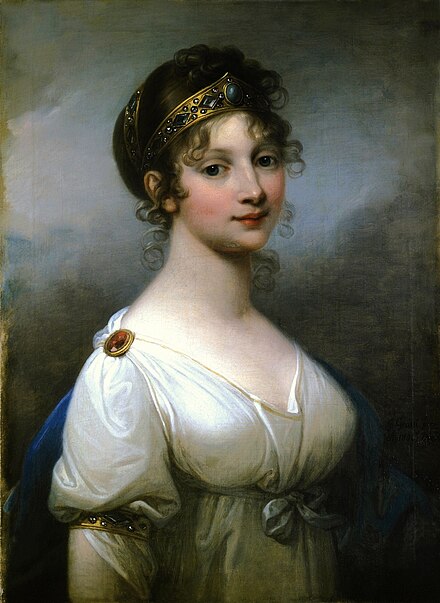
With a heavy heart, Queen Louise did not hesitate to accept the request from her husband. “Never shall I forget,” writes her physician, Hufeland, “the moment when the noble Queen received the King’s command to come to Tilsit, in order, if possible, to obtain still more advantageous conditions of peace from Napoleon. This she had not expected. She was beside herself. Amid a thousand tears, she said: ‘This is the most painful sacrifice that I can make for my people, and only the hope of being useful to them thereby can bring me to it.’ Louise says in her diary: ‘God knows what a struggle it cost me! For although I do not hate the man, yet I look upon him as the one who has made the King and his land wretched. I admire his talents. I do not like his character, which is obviously treacherous and false. It will be hard for me to be polite and courteous to him. But just this hard thing is required of me. I am accustomed to making (make) sacrifices.’” (Kluckhohn, pg. 33)
The meeting went well, and although Queen Louise would leave with Napoleon’s promise to be benevolent to Prussia, he would end up not keeping them. “All my words to the Queen were only polite phrases, that bind me to nothing.” (Kluckhohn, pg. 35)
Napoleon would join forces with Austria, and the threat to take over Prussia became stronger. To keep the country afloat, the royal family gave up their valuable possessions to help the country. They used their gold and valuables to pay for the needs the country faced in the war. Queen Louise would also offer personal sacrifices for the sake of her country. “To the same end, Louise gave away, when the need grew constantly greater, her brilliants (jewelry) and retained only one ornament of pearls, which, according to her own expression, she loved more than her diamonds and considered more suitable for her; ‘for pearls betoken tears, and I have shed so many of these.’” (Kluckhohn, pg. 41) In only a few years, this act will be shown in the lives of many other women.
War would continue, and the Queen and her children would move from place to place to remain safe. Throughout the years, William and Louise’s love for each other never failed. While his duties of running the country and dealing with their enemies kept him away from her, he took every opportunity to be with her. Louise continued to sacrifice for the sake of the people of Prussia.
In the spring of 1810, the Queen’s health began to deteriorate. Some sources say that she was fighting an infection from surgery on her neck that left an open sore. She began to have difficulty breathing, likely from pneumonia, accompanied by a high fever. She recovered but had a relapse at the end of June. “For ten days her condition continued almost unaltered: fever, a cough, and weakness, only the weakness grew greater and the breath shorter. But it is hardly necessary to say that the Queen bore her sufferings with patience and submission to God.” (Kluckhohn, pg. 78) In mid-July, she developed spasms from the fever, and the doctors sent for the King. When he arrived on July 19th, she was close to death. The King sat on the side of her bed and, holding her hand, could not hold back the tears. Her last words were, ‘I’m dying, O Jesus, make it easy!’” (Kluckhohn pg. 79) Queen Louise passed away in the arms of her beloved husband at the age of 34.
“Never did a people mourn more deeply for a sovereign than did Prussia and a great part of the rest of Germany for Queen Louise. The grief was soon converted into a feeling of anger and revenge, of revenge toward those who had tortured to death this noble woman. It was universally said that the foe had killed the tutelary goddess of the people, and thus, the name of the gentle, saintly sufferer became the watchword in conflict and war. ‘Our saint is in heaven,’ said Blücher.” (Kluckhohn, pg. 80)
What happened later may have been due to the influence of Queen Louise. The King, who needed funds for the kingdom, requested that wealthy women donate their gold jewelry for the cause of Prussia. In trade, their country would give them jewelry made of iron with the engraving, “I gave gold for iron.” The response was overwhelming, making it fashionable to wear iron jewelry instead of the fancy jewelry of the rich.
At this time, the King wanted to develop an honor for women, such as the Iron Cross given to the male soldiers. The result was the issuing of the “Order of Louise” by King Frederick William. The first honor was posthumously given to Louise on her birthday in 1814. The award was to commemorate those women who had given to their country during the wars with Napoleon. She was revered as the “soul of national virtue” for her love of her husband, country, and God.
And what about Napoleon when he heard the news of Queen Louise’s death? Various sources quote Napoleon stating upon the news of her death, “The King has lost his best minister.” Even the enemy could do nothing but praise her.
“Her children rise up and bless her; Her husband also, and he praises her, saying: ‘Many daughters have done nobly, but you excel them all. Charm is deceitful and beauty is vain, but a woman who fears the LORD, she shall be praised. Give her the product of her hands, and let her works praise her in the gates.’” Proverbs 31:28-31 (NASB)
Danny Minton is a former Elder and minister at Southern Hills Church of Christ
 Spirit Of Abilene
I have enjoyed your historical stories. They are informative and interesting.
LikeLike