
Election Post-Mortem

By Jim Nichols
Writer and Christian thinker Henri Nouwen has said succinctly: “There are no times or places without choices.” Most of the choices we make are of low consequence—a choice to get up today, a choice to stay home or go somewhere, a choice where to sit in the room, a choice to read this or not. But even low consequence choices can add up to having large final consequences.
Choices require decisions. There are options we as individuals have for making decisions. These ideas are in no order.
- Consider the consequences. This utilitarian approach considers the advantages and disadvantages of each choice; we try to choose the one with the most advantages. The idea is to create “. . . the greatest good for the most people.” This requires us to predict the future and to define what “greatest good” means. Furthermore, what might be good for most people might be exactly the wrong decision for others; the minority might rightly complain about being left out or even harmed.
- Consider my duty or obligation. My actions should stand on basic moral understandings that I have. This reliance on a moral standard is particularly attractive to Bible believers and those steeped in religious tradition. The most obvious benefit of this approach is that once you know the rules, the choice is clear. As one might expect, it is not as simple as this. People who live in such a black and white world must overlook the ambiguity and paradox of life. In addition, does this mean ignoring consequences?
- Consider the rights of the parties involved. This position states that moral claims of individuals (their rights) are taken most seriously. A hierarchy of rights resolves dilemmas—whose rights are more important than others? This is an attractive approach in American society because we are a very “rights” oriented country.
- Consider what kind of person I want to be. Given the complexities of the three previous options, we should re-phrase the problem. If I choose to behave a certain way, is that a display of the kind of person I want to be? Some would describe this as depending on our intuition—I would suggest that we are trying to follow the guidance of the Holy Spirit. I find this approach preferable to the others; it does not always yield clarity, but it allows me to go to sleep at night with at least some degree of trust and comfort.
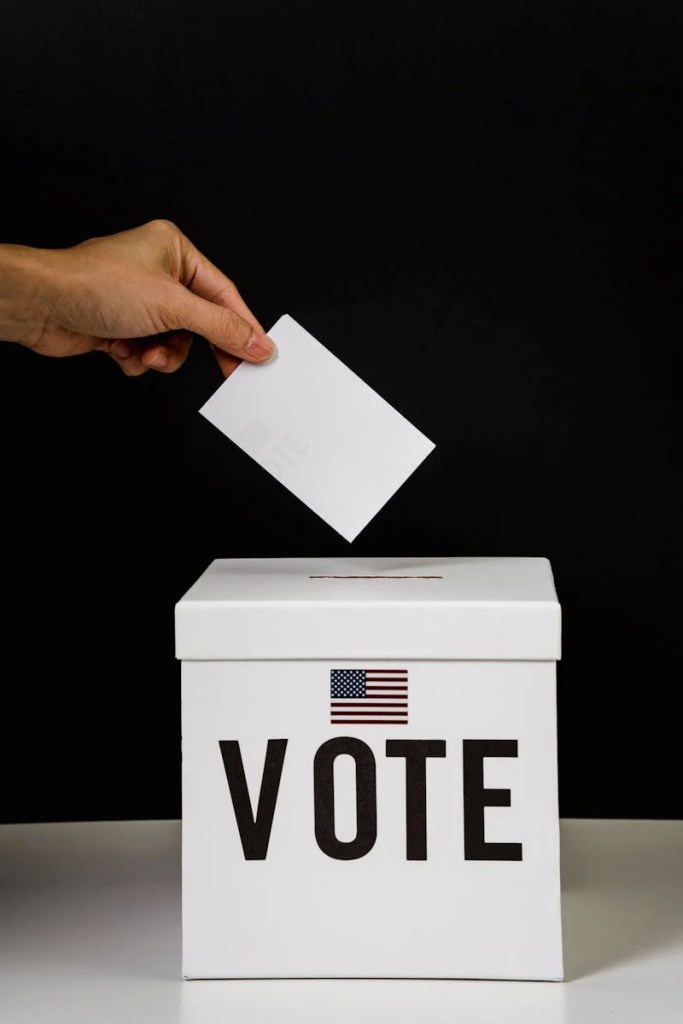
Not only do we face decisions on an individual level, the various levels of the government face decisions also and those decisions fall into the same categories. The recent presidential election gives us a window as to how that decision was made. Does it make sense that the government and the electors themselves should consider the consequences of any action? I believe so. Does it make sense that they consider duties, obligations, and rights of all? I believe so. Does the re-election of Donald Trump display to ourselves and others that this is the type of country we want to be? Not at all.
There are no mysteries about the character of Donald Trump. The list of vulgarities, lies, dishonesty, treatment of women, treatment of the vulnerable, and lack of a clear view of the workings of democracy are clear. Is this the kind of president we want?
Let me miniaturize the issue a bit. If a person with those poor qualities were running for mayor of your city, would you support that person? Is that the kind of mayor you want? How about a city council member? School board member?
The punchline is: when we make a personal decision, we should ask ourselves “. . . by making this decision, am I displaying the type of person I want to be?” By voting for a candidate, the citizens should ask themselves “. . . by voting for this candidate, am I displaying the type of country/city council/school board I want to have?”
Our country made a decision in the recent election; it was a temporary decision. Presidents come and go. Presidents are temporary.
I may not be alive four years from now, nor may you. For sure, someone we love deeply will not be alive. What we can do for the next four years is take care of one another. Jesus in John 16 reminds us to “. . . be of good cheer; I have overcome the world.” That should allow us to go to sleep at night with some degree of trust and comfort.
Jim Nichols is a retired Abilene Christian University biology professor and current hospital chaplain
 Spirit Of Abilene
Thank you for this thoughtful post-mortem. I know I have been gutted!
LikeLike