
Interstate Highway

By JIM NICHOLS
Ribbons of concrete stretch from city to city and from coast to coast, but those ribbons are a relatively new addition to the country. Although the exact stimulus for the interstate highway system is unclear, President Dwight Eisenhower is generally credited with using his influence to promote and fund the concept in 1956.
Early in the twentieth century Henry Ford and the Model T had planted the seeds for Americans’ love affair with the automobile. Some can still remember, however, the hodgepodge of one and two laned roads that one had to use to get from point A to B. Furthermore, if A and B were any substantial distance apart, the time for a trip was a serious consideration as to whether even to attempt it. Getting behind a slow-moving car (or, heaven forbid, a truck), meant a significantly reduced speed for many miles if hills were involved. I clearly remember my mother complaining about getting behind a “fat bottom” (a truck) and not being able to get around it. Passing the slower moving vehicle ahead was a dangerous venture.
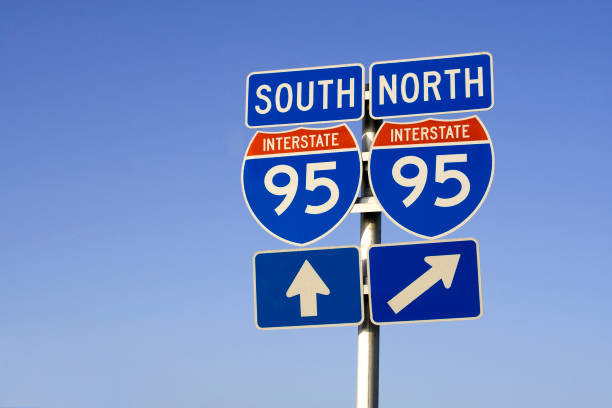
The interstate system, however, removed much of that frustration. Today, we spend substantial driving time on controlled access multi-lane interstates; it is our way of life. Cocooned in our air-conditioned cars with audio blaring, however, it is easy to forget that there are people living in the country just a few (or more) miles from that concrete. They are living lives physically and emotionally much different from us on the highway. If you look out the side windows, you might see dwellings where people conduct lives differently from ours physically, although their hopes, desires, and memories are quite human.
Swerving to the right from the interstate, one travels a mile or so parallel to the highway on the access road. The county sign designates the next right turn onto a poorly paved road perpendicular to the interstate that now fades into the rear-view mirror. The county road is wide enough for a passing car, but soon the pavement ends, and gravel begins. Your vehicle creates a cloud of dust, as does anyone passing. For five miles only a few scattered dwellings appear along the road. Occasionally, some cattle or horses gaze over barbed wire. The grasshoppers of summer perch on the windshield and look enormous only twelve inches from you.
After those five miles, a left turn onto another gravel road is necessary. After about three more miles, two dwellings appear. On the left is what appears to be a substantial house. After another two hundred yards on the right is a worn mobile home. Addresses, of course, are non-existent. The only hope for direction is a name on a broken mailbox.
A dirt road leads to the mobile home. It is barely passable, especially following a recent rain. Four dogs greet the visitor. There are no guarantees they are friendly.
The steps up to the home are broken, but the woman greets the visitor and invites you to sit. The visitor has been there before, and the conversation will be familiar to both.
She is ill and has been for a long time. A family member lives with her although he is gone to work during the day. She is generally alone, though feels cared for sufficiently.
The conversation soon turns to the painting on the wall, as usual. Her cognition is failing, but she certainly remembers that painting. It shows her family home in another part of the country. She again relates how her husband ran a small lumber mill on the property. Neighbors would bring freshly cut trees to him and he would process them into usable lumber. In the painting is a house plus three small work buildings. She loved that house and speaks of the family joy of holidays at a nearby beach as well as winter snow. She repeats the story of buying the children their first snowmobile.
She is a gentle woman, treasuring having a visitor to talk with. She responds with enthusiasm to an offer of a prayer.
The interstate is several miles away. Cars are making good time toward their destinations and are doing so in relative safety. She is content to turn the pages of life and look at the painting.
Jim Nichols is a retired Abilene Christian University biology professor and current hospice chaplain
 Spirit Of Abilene
Beautifully and thoughtfully written. I, too, love the side roads where so much life has happened before the interstates. My family used to make two trips a year from Abilene to Arkansas to visit family–all before interstates and car air conditioning. I still remember those long and interesting trips.
LikeLike