
Tour Curtis House Cultural Center in Honor of Black History Month

Click here to learn more about Curtis House Cultural Center. To schedule a group tour during Black History Month or at any time, call 325 704 2514.
By Loretta Fulton
The Abilene Interfaith Council invites individuals and groups to join in a tour of Curtis House Cultural Center in honor of of Black History Month, which is celebrated each February.
The tour, hosted by Curtis House founder Andrew Penns, begins at 7 p.m. Tuesday, Feb. 10. Admission is free and refreshments will be served. The cultural center, located at 630 Washington St., opened in 2016 as a project of Interested Citizens of Abilene North (ICAN). Penns also was instrumental in the founding of ICAN. His son, Terrence Penns, was named director of the cultural center in January 2025, succeeding his father. The center itself is housed in a bit of Abilene history. It originally was the home of Sam and Sammie Curtis, owners of Curtis-Starks Funeral Home.
Penns is heavily involved in Abilene where he grew up and was in the last graduating class at Woodson High School in 1967. He is retired as a supervisor in juvenile alternative education for Taylor County and is a member of the Taylor County Historical Commission. His true calling, however, is to the ministry. On. Jan. 18 of this year, the congregation at Valley View Missionary Baptist Church celebrated the 38th anniversary of his service as pastor. Penns’ father, Alex W. Penns Sr., was a former pastor of the church. Andrew started preaching there and served as an assistant to his father. He was asked to be the interim minister in 1987 and then permanent pastor.
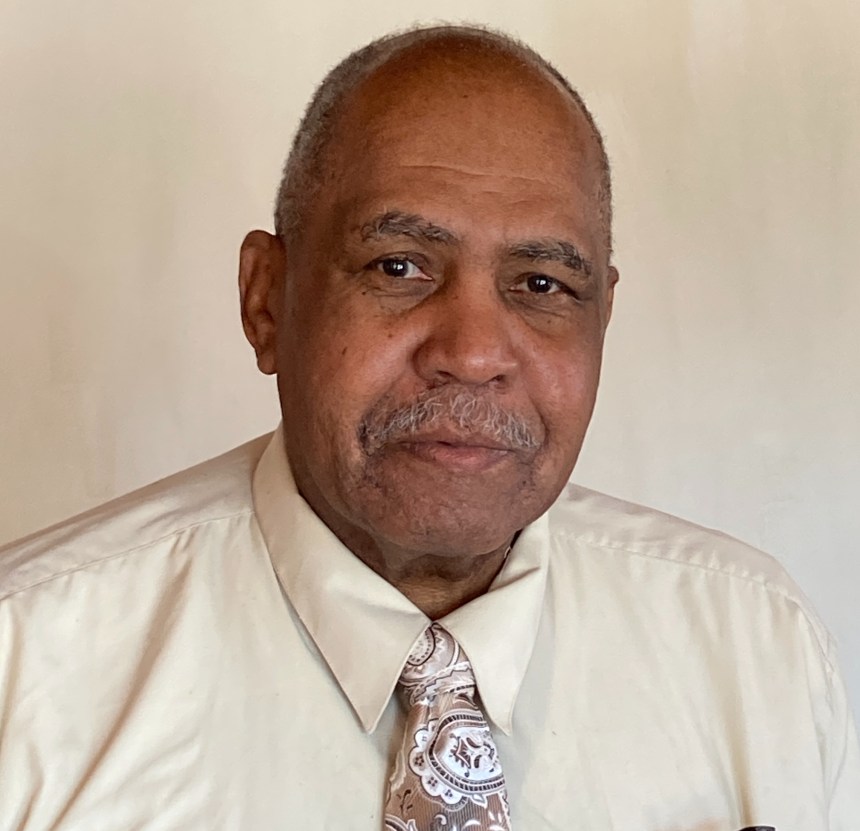
Andrew Penns
Penns said in a previous interview that he hears one comment over and over as he escorts people on tours through the museum.
“I didn’t know that,” people say as Penns offers tidbits of information on artifacts, people, places, and events significant in the history of the contributions of Black Abilenians to the city’s development.
The two-story center is filled with photos, newspaper clippings, and other displays telling the history of Black people, businesses, and institutions in Abilene. The following is from a previous article written by Loretta Fulton for Abilene Scene magazine:
A tour of Curtis House takes visitors through the various rooms of the two-story house. Each room has a theme such as the military room, with photos of Black Abilenians who have served in the military, including some who died in World War II. A display that Penns is especially proud of is a blowup of pages from a book titled, “Taylor County WWII Veterans in Abilene, Texas.”
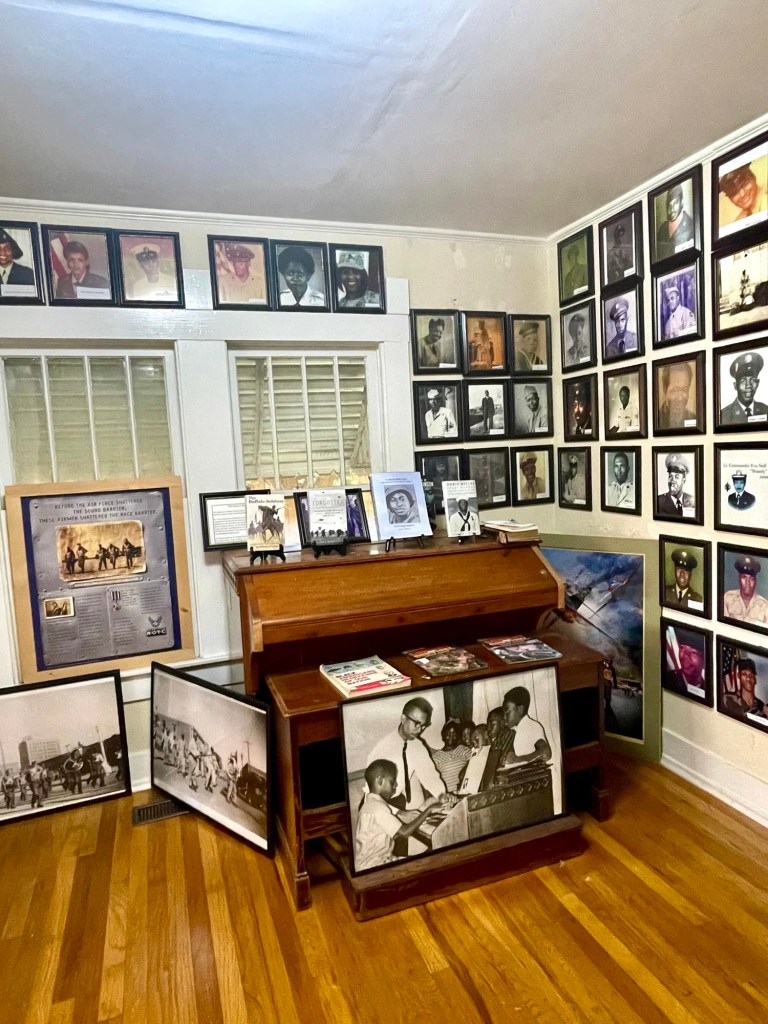
A military display at Curtis House Cultural Center
The five pages contain photos of Black veterans from Taylor County. In the book, the Black veterans were pictured in the back section, separate from the white veterans in the front of the book. Educational displays dominate another area, with photos and artifacts from the Woodson era before Abilene schools were integrated.
A copy of a Texas Historical Commission marker telling the history of Dyess Elementary School – the first school in Abilene to integrate – always brings the, “I didn’t know that” comment, Penns said. A section on the second floor honors Black educators like the late Robert Brewster, who was the last principal at Woodson Elementary School. He was admired and respected–but also had another trait.
“Boy, he would put fear into you,” Penns recalled.
An artifact of special interest is a copy of the Oct. 15, 1998, journal, Black Issues in Higher Education. The cover features James Hill, who was band director at Woodson High School in the 1950s. Born Aug. 21, 1928, in Austin, Hill was denied admission to the University of Texas after graduating from an all-Black high school in Austin. He later earned a master’s degree and doctorate from UT and became the university’s first Black vice president when he was hired in 1993. Hill died Sept. 2, 2012.

Loretta Fulton is creator and editor of Spirit of Abilene
 Spirit Of Abilene