
Princess of Princesses
First part of a two-part series. Click here to read Part 2.
By Danny Minton
“The day on which, one hundred years ago, Louise, afterward Queen of Prussia, beheld the light of this world deserves to be honored by all Germans as one of the great memorial days in their country’s history. The life and sufferings of the noble Princess are joined most closely with a significant and distinct part of Germany’s past, and the blessed consequences of her deeds endure even to the present.”
The opening lines of August Kluckhohn’s “Louise, Queen of Prussia: A Memorial” speak with words of devotion about how much Queen Louise meant to the German people at the beginning of the 19th century. Luise (Louise) Auguste Wilhelmine Amalie was born to Charles, soon to be the Grand Duke of Mecklenburg-Strelitz (1794), and Princess Friederike of Hesse-Darmstadt on March 10, 1776. Her mother died when Louise was six years old. Two years later, her father married Charlotte, Friederike’s younger sister, who died a year later from childbirth complications. In grief, her father moved to Darmstadt and placed the children in the care of Louise’s grandmother, Princess Maria Louise.
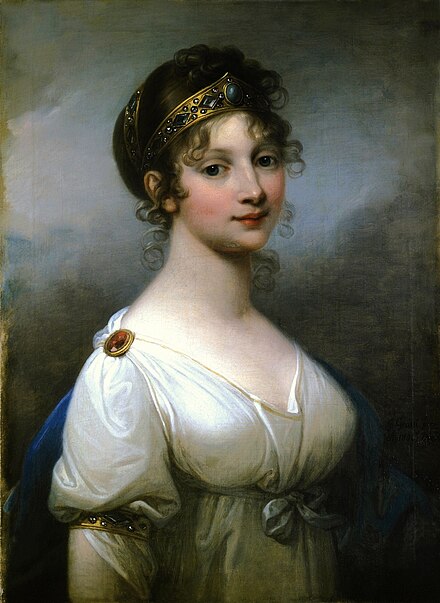
Louise became fluent in French and received religious instruction from a local clergyman. She was also taught to be charitable, visiting the less fortunate and needy homes with her governess. She often got in trouble for donating too much to help those in need. Her giving heart would be a part of her character until the day she died.
In 1793, at seventeen, Marie Louise took Louise and her sister, Frederica, to Frankfurt to pay respect to her nephew, King Frederick William II of Prussia. There, she met Prince Frederick William III, who was so smitten with her charm that he decided to choose her as his wife. At the same time, her sister impressed Prince Louis Charles, and the two couples began planning a double wedding.
Toward the end of the year, Louise came to Berlin for her wedding to the Crown Prince. The whole city was out to meet her. “The arrival of the angelic Princess spreads over these days a noble splendor. All hearts go out to meet her, and her grace and goodness leave no one unblessed.” (Kluckhohn, pg. 9) Among the crowd were eighty children clothed in white with garlands of flowers and a young girl who read a festive poem. Louise was so touched with emotion that she took the young girl in her arms and kissed her. The steward of the house was taken aback by her breaking etiquette. The people, however, were drawn closer to her. She and the crown prince were married on December 24, and her sister, Frederica, and Prince Louis married two days later.
She took every opportunity to show kindness to the poor and basking in the joy of others. All admired her so much that her father-in-law, King Frederick William II, called her the “Princess of Princesses.” On her first birthday in Berlin, she received many extravagant gifts. The King then asked if there was anything else she desired. “The Crown Princess wished for herself a handful of money in order to let the poor people of the capital share in her joy. With a smile the King asked how great did she suppose a handful of money to be. The answer runs: “As great as the heart of the most gracious of Kings.” With royal liberality was her wish fulfilled.” (Kluckhohn, pgs., 12,13)
On November 6, 1797, after his father’s death, Crown Prince Frederick William III was crowned King of Prussia. Louise wrote to her grandmother, “I am now Queen, and what rejoices me most is the hope that now I need no longer count my benefactions so carefully.” (Kluckhohn, pg.13). “Louise stood at the summit of prosperity, beloved and honored by all circles of the people, as rarely a queen has been. While one blessed her name on account of the benevolence which she practiced in secret, others praised the graciousness and kind condescension that she showed to everyone, and again others honored her as an exalted pattern of all virtues.” (Kluckhohn, pg. 13)
She was said to be just as at home with those who possessed little and those with means. Her deep desire was to train her children to be the same. “To train my children to become benevolent lovers of mankind,” she expresses herself in a letter of the year 1797, “is my warmest and dearest wish. I even nourish the glad hope of fulfilling my aim.” (Kluckhohn, pg. 16) She writes to her father about her children after Prussia had gone through several wars, and the family had to move around to survive. “Circumstances and relations train men, and it may be well for our children that, already in their youth, they have learned to know the serious side of life. If they had grown up in the lap of plenty and ease, then they would suppose everything must ever be thus. But they see by the grave countenance of their father, and the grief and frequent tears of their mother, that things can change.” (Kluckhohn, pg. 69).
Louise was one who loved God and people. At a young age, she desired to improve things for everyone, rich and poor. She also taught this to her children. As a result, her popularity grew before the people who loved her not because she was their Queen but because of her inner beauty. She was a true model of Jesus.
But there is more to her story in the next segment, “Louise, Queen of Prussia.”
Danny Minton is a former Elder and minister at Southern Hills Church of Christ
 Spirit Of Abilene
I did not know this story. Our world needs more souls like Princess/Queen Louise.
LikeLike