
Accepting the Stages of Life

By Nancy Patrick
As an observer of life, I have formed theories and given advice to my fellow human beings for a long time. I demonstrated this talent better in my younger years than I can now at 74-years-old. I find that as my body wanes, so does my talent.
I attended a funeral of a dear friend a few weeks ago who had reached the age of ninety-one. A wonderful man who had lived a good life, he had a family, an important profession, and a strong spiritual life.
The officiating minister commented on the photo of the deceased, saying the photo represented the man’s stage of life. He had managed to reach the stage we call old age.
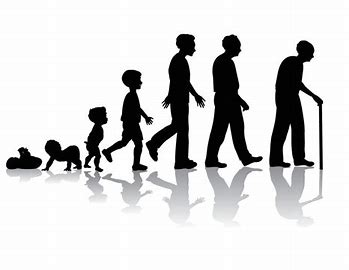
I tend to think of life in stages of infancy, childhood, adolescence, young adulthood, middle years, mature years, and old age. I didn’t think much about those stages while I went through them—at least until this last one. I have had a really difficult time reconciling my younger person with my old self.
In 2019, I wrote the article “The Shrinking Woman” for Spirit of Abilene (Spirit of Abilene). I wrote about how my mother’s life had shrunk as she aged. Just as her body suffered from osteoporosis, her personality suffered from self-imposed isolation as she lost interest in social activities and found her recliner more comfortable than the effort of socializing.
A couple of years later, I wrote the column “Embracing Mortality” (Spirit of Abilene), in which I explored the idea of modern medicine and its ability to extend life. After having been my parents’ caregiver for many years and watching the difficulties embedded in elder care, I decided to make some decisions regarding my own elder years and how I wanted to handle them.
My own body had been extraordinarily healthy for seventy years, misleading me into unrealistic expectations for my own old age. Thankfully, I had the compassion not to tell my parents that I sometimes wondered if they exaggerated their aches and pains. Time and age have a way of chastising us for our arrogance and presumption.
I add my own idea that God gave us finite bodies and minds because human beings can handle only so much change before they implode. I have certainly experienced this stressful phenomenon during the past four years.
I began having problems with my knees in my 60s. At first, I took supplements for the joints but eventually had to resort to steroid injections for relief. Those worked for a few years, but I finally had to have both knees replaced in 2020.
My surgeon agreed to operate on both knees at the same time, a rare concession of most surgeons. I admit the knee replacements traumatized my body with pain beyond description; however, with dedicated physical therapy, I felt really good about my knees at the end of a year.
Although I had minor back pain in my 60s, that pain became serious and debilitating by the age of 70. I started with stenosis in my lower spine that was corrected with a relatively minor surgery called a laminectomy.
However, by 72, my spine had deteriorated to the point that I had to have a fusion of three vertebrae. Though a difficult surgery, I was up and about after another year.
Then, the real drama occurred the last day of January 2024. I had “the fall”—you know the one we tell people: “you are only one fall from changing the rest of your life.” I took a very hard fall, flat on my back. It literally knocked the wind out of me so that I couldn’t get up or get my bearings for a couple of minutes.
When I finally stood, I realized something was wrong. My insides felt shaken and displaced. I had excruciating pain in my back. You have probably guessed it—I fractured vertebrae L2, the vertebrae just above my spinal fusion.
Needless to say, I spent the next ten months having multiple procedures (kyphoplasty, medial branch blocks, and neurotomy) to alleviate pain and restore some strength. I have probably reached my maximum health in the repair department, so I now work on accepting this last stage of life with as much dignity and grace as I can muster.
I recently read Ann Tyler’s book A Patchwork Planet about a young man named Barnaby Gaitlin. He worked for a company called Rent-a-Back, which provided all sorts of help for elderly people who had “honey-do” lists. Barnaby learned a great deal about old age.
After helping many elderly clients clean out attics, add pull bars to bathrooms, and convert sun rooms into convalescent spaces, Barnaby formulated a truth about old age.
He said, “I thought a guy could just make up his mind to have a decent old age. Now I know there is no such thing—or if once in a blue moon there is, its’s a matter of pure blind luck.”
After listing many of the characteristics of many of his elderly clients, Barnaby summed up his philosophy: “I’m telling you don’t ever get old!” Since we don’t really have control over nature’s timeline, I think the best we can do is trust God to see us through this last stage of life and welcome us into peace and rest.
Nancy Patrick is a retired teacher who lives in Abilene and enjoys writing
 Spirit Of Abilene