
Mending Fences

By Nancy Patrick
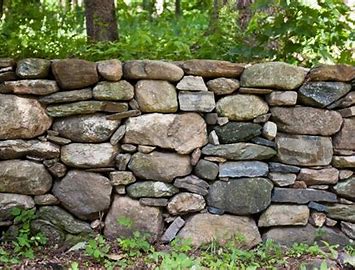
One of my favorite American poets, Robert Frost, wrote an insightful narrative poem called “Mending Wall” (Robert Frost). The poem tells the story of two landowners who meet one day a year at the beginning of spring at the dividing line between their two properties.
On that dividing line resides a rock wall that suffers normal winter damage each year as weather, hunters, and animals loosen rocks that fall to the ground. The two men walk on their sides of the wall to repair the damages. As they make their way down the length of the wall, one of the men assumes a teasing tone as he asks his neighbor why in the world they bother to keep a wall when neither man has property that would infringe on the other’s.
The questioned neighbor always responds with his father’s adage, “Good fences make good neighbors.” In spite of the questioner’s repeated attempts to elicit agreement that they do not need the wall, the other man continues to say, “Good fences make good neighbors.”
Learning to behave harmoniously begins within our families and then with our neighbors. We learn to share meals, bathrooms, and cars in our own homes, and that extends to sharing streets, fences, driveways, and babysitting services with those in our neighborhoods. Life works much better when we can find ways to share, compromise, or even give to others.
My husband and I live in a neighborhood with about 400 homes situated in such a way as to accommodate both a small lake and a rather large golf course. Because of those two geographical features, the lots vary greatly in size and shape.
Consequently, our home sits on one of the largest single lots in the area. There are no alleys, so houses sit side by side, across the street from each other, back-to-back, and in some cases side to back.
If we all removed our fences, we would have a very large open green area in the midst of the backs of our houses. On some days, that proposition sounds pastoral and peaceful; however, on other days, I think we are all happy to have our fences.
Our neighbors on one side are a middle-aged couple with no children. They live very private and quiet lives, so we don’t see or hear them often. On our other side resides a young family with children who have many friends and relatives who visit frequently. They have cookouts, parties, music, basketball games, and jumping contests on their trampoline.
Next to them lives an elderly couple, very quiet and almost invisible. The only evidence of their residence appears in the form of their garbage bin on Monday and Thursday mornings. Directly behind us lives a couple in their seventies who have a large family with many grandchildren of all ages. Their grandkids sometimes bring a large, loud dog who barks while the grandkids play basketball and Ping-Pong.
Mike and I have no family nearby, so we spend a lot of time outdoors doing yard work and playing with our dog Gracie, a rescue dog who doesn’t bark and lives in fear of strangers and noise.
As I think of our combination of back yards, I am really glad to have the separation the fences provide. Although we can hear and sometimes see our neighbors’ activities, we all feel free to express ourselves and do our activities without fear of interference. Our fences do tend to make good neighbors.
The geographical placement of people, homes, and countries makes harmonious living difficult and sometimes impossible. With such large land masses in Europe and Asia where many countries abut each other, the people live in constant fear of violence from other nations, tribes, and ethnic groups.
On Sunday, October 6, Dr. Matt Cook used as his scripture text Romans 12:18-21 in his sermon at First Baptist Church. This passage focuses on the difficulty of maintaining harmony within human relationships. The goal of harmony goes against the natural desire we have to attain fairness for ourselves.
That means we forfeit our right for revenge rather than exacting punishment for a wrongdoing. Not only that, but scripture commands that we avoid evil by doing good. Because of the volatile nature of human personalities, maintaining peace and harmony presents a challenge. One look no farther than the global political climate in today’s world.
Political systems tend to ally themselves with like-minded countries, sometimes nearby geographically and sometimes not. As the world teeters on the brink of multiple regional wars and whispers of a broader world war, the only answer for peace is Romans 12.
We can try to wall out other people, but none of the walls can withstand the pressure of widespread migration as people escape gang violence, political corruption, wars, famine, and disease. God doesn’t condone our hatred of each other, nor does He sanction our vengeance against others.
If we could look at ourselves and our neighbors as parts of a jigsaw puzzle, we would find that each piece fits in a precise place. Our fences may help maintain peace, but at some points fences sustain damage and need maintenance. That could mean removal, repair, or rebuilding.
Nancy Patrick is a retired teacher who lives in Abilene and enjoys writing
 Spirit Of Abilene