
Dia de los Muertos Celebrations
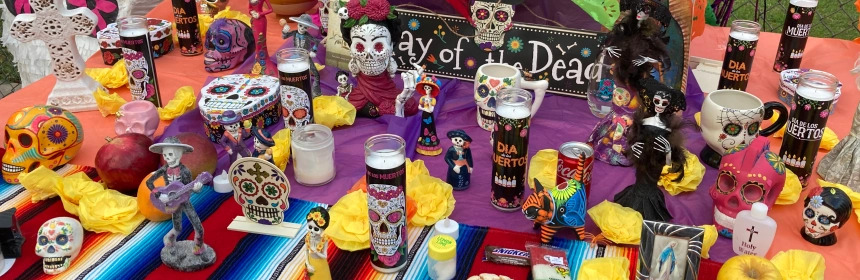
Four public events, including sugar skull crafts, live music and dance performances, and a showing the movie “Coco” are scheduled in Abilene for celebrating Dia de los Muertos or Day of the Dead.
Two events will be held this week and two in November. All are free.
The first will be held 5 to 8 p.m. Thursday, Oct. 24, at the Grace Museum, 102 Cypress St. The event will feature cultural festivities and activities for all ages. Events include a performance by Ballet Folklorico de la Alvaro Munoz, an Ofrenda, sugar skulls, book readings, and more.

The second will be held Saturday, Oct. 26, at the Mockingbird Branch of the Abilene Public Library, 1326 N. Mockingbird Lane. A free sugar skull workshop will be held 2:30-4:30 p.m. The event is come-and-go.
All supplies will be provide free of charge.

On Nov. 1, North’s Funeral Home, 242 Orange St., will host its annual Day of the Dead celebration 6-8 p.m.
The event will include performances by the Ballet Folklorico de Alvaro Munoz Academy and Ballet Folklorico Alma de Nuestras Raices del Big Country, live mariachi music, traditional Pan de Muertos, food trucks, and more. Everyone is asked to bring a photo of a deceased loved one for the community altar or Ofrenda.
The Abilene Interfaith Council is hosting a free showing of the movie, “Coco” at 10 a.m. Saturday, Nov. 9. It will be in the auditorium in Old Main. The following is from the Interfaith Council:
”Join us November 9 at 10 a.m. in Old Main Auditorium at McMurry University as we watch the popular Pixar movie “Coco”
“Coco” is a beautiful story suitable for people of all ages and is centered around the Mexican holiday of Dia de los Muertos. We’ll also have a local film studies professor, Dr. Zachary Ingle, come speak to us about the cultural work that went into making this film and a bit about the celebration. “

The following explanation of Dia de los Muertos is from the Grace Museum:
“Día de los Muertos is a holiday observed throughout Mexico and Central American and South American regions. The celebration emerged with Spain’s colonization of Mesoamerica as indigenous beliefs and practices adapted to Catholic ones. On November 1 and 2 each year, families and friends joyfully celebrate their loved ones who have passed. Some people commune with their ancestors in a liminal space, while others enjoy an annual remembrance of their loved ones. Common practices include setting up ofrendas–altars with the deceased’s photos and favorite things–and making the iconic sugar skulls that have become synonymous with the holiday. Calacas (decorative skeletons) adorn celebrations and Catrinas paint their faces as Día de los Muertos applies humor to what would otherwise be a rather solemn observance of the dead.”
Dia de los Muertos has been observed by indigenous people of Mexico for centuries. It is so significant that in 2008 the United Nations Educational, Scientific and Cultural Organization (UNESCO) added the day to the Representative List of the Intangible Cultural Heritage of Humanity.
 Spirit Of Abilene