
It’s Okay to Gush
By Marianne Wood
I work for a storyteller who writes about and photographs the people he meets and the places that take his breath away. Since I like stories and pictures a lot, I find my work engaging every day. It is challenging but great fun to work for a storyteller.
There are many authors, painters, photographers, and songwriters that I enjoy. I especially like the elegant prose of Joan Didion, the gritty novels of Jodi Picoult, the compelling portraits of John Singer Sargent, the haunting music of Joni Mitchell, and the joy-bound sound of CeCe Winans singing Goodness of God. I love the fashion photography of Irving Penn and appreciate all those National Geographic photographers who have created works that cause us to release a collective gasp.
I like crawdads that sing and rules of civility. I especially like the story of a man who lived in a hotel in Moscow and the adventures of a 100-year-old man who climbed out of a window and disappeared. And I like funny stories, too, about folks in the English countryside. P.G. Wodehouse still makes my family laugh. Perhaps you, too, know these stories and their authors or have favorites you could gush over if you met their creators.
I met one of my favorite authors last week. On my way out the door to hear her speak at Abilene Christian University, my husband grinned at me and said, “Don’t gush.” But I did. And it was okay. At the book signing table in the lobby of the Hunter Welcome Center, as my words of praise and thanks rushed out, I told this writer my husband’s cheeky warning. Tish Harrison Warren replied, “It’s okay to gush.”
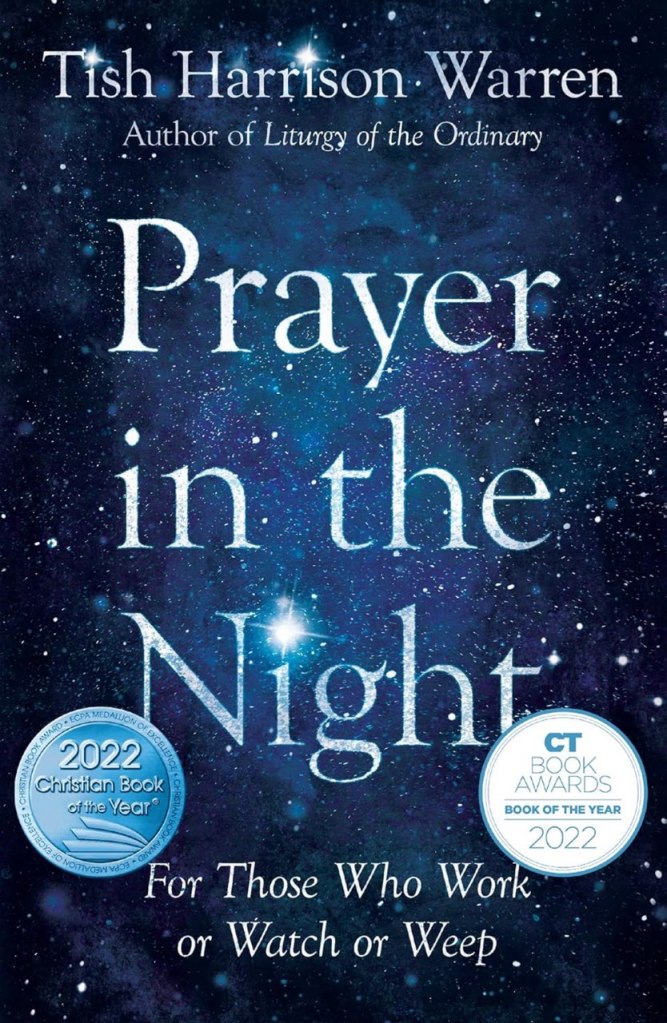
Tish tells stories of faith worked out in the everyday crucible of life. I suspect that’s how we get most literary, musical, and pictorial stories. So tears and lots of words rush out when we connect, as I did deeply with her book, Prayer in the Night: For Those Who Work or Watch or Weep. In this book, Tish provides an exegesis of the Compline Prayer found in the Anglican Book of Common Prayer. One of my many, many marked quotes reads: “To hope is to ‘borrow grace.’” I borrow grace whenever I even look at this book’s cover. Her insights met my need for hope at a crucial intersection. They continue to bless me.
Of course, all good storytellers have in common a sympathy for humankind. They care deeply about the journeys of others. They’ve lived in the world of their characters, whether imaginary or biographical.
And stories are great fun. They take us places we’d like to go—and maybe we should! Or they allow us to explore emotions we didn’t know existed in our hearts and minds. Occasionally, we read or hear a story that feels like an attack on the soul, and we wonder why we bothered.
But the truth in the bad, good, and great stories helps us refine our view of the world. I refuse to give space for the title of the last lousy story I listened to, but suffice it to say, most stories have value. And the stories in plain sight—the people we encounter—come from all sorts of interesting places. We are wise to truly see them. Perhaps we should invite them to coffee so we can listen and learn. We might find ourselves gushing.
Marianne Wood works as an editorial assistant and researcher for Bill Wright
 Spirit Of Abilene
Thank you for this refreshing reflection about the power of personal stories. We live in a time when we need to hear more about hope, mercy, forgiveness, and goodness.
LikeLike