
School Vouchers

by Mike Patrick
Like most people, I am a peace-lover. I have on occasion been fortunate to facilitate peace, a peacemaker. By nature, I avoid confronting others. However, when caring enough for or about someone or something, times come along to bring an issue to the table. In pastoral care, we like to use the term “carefrontation.” I care enough about you to bring it to the front of our conversation.
The issue I place on the table today concerns Texas’ effort to adopt vouchers for private education. Having been married for 55 years to a retired Abilene public school teacher and having been raised by a father who wrote on one occasion for Americans United for Separation of Church and State, this issue naturally draws my attention.
Some people often argue that parents should have the right to send their children to any school they choose. Parents absolutely do have that right. However, it should exclude tax-dollar funding. Public monies should support public schools, not private schools. Public monies should support the public good, not private good.
Consider several reasons why vouchers would harm Texas.
Vouchers financially drain public schools of resources.
The state provides public school funding based on the number of students in attendance. For every child who attends another school, private, parochial, charter or home school (which is certainly the parents’ right), the local school district receives fewer dollars. If the state provides school vouchers, it gives a financial incentive to take more children out of public school. Rather than redeeming public education with all of its frustrating problems, vouchers contribute to the ruin of public education. (For example, in Ohio, the state has funneled hundreds of millions of dollars to charter schools since the early 1990s. Two years ago, one-hundred school districts sued the state over the voucher program.)
Some say that vouchers will help the poor attend a better school and receive a better education. Over the past thirty years, history has shown that vouchers only cover a portion of the cost of non-public schools, and the poor cannot afford to make up the difference. History also shows vouchers help the well-to-do reduce their costs that they can afford (since their children are already in private schools).
Perhaps the two hardest hit areas are the urban schools with their inner-city challenges and small rural schools, if vouchers pass the Texas Legislature. An individual or corporation could come to a small town to start a private school and decimate the public school system.
Vouchers socially divide the community.
In spite of the declared purpose of a school, non-public schooling tends to divide the community along economic and racial lines. Private schools can choose their students while public schools must take everyone, no matter what race, socio-economic group, disability, or temperament.
In our pluralistic society, public education creates the opportunity to discover differences among us and to form new friendships. Public schools have significantly contributed to the common culture of our nation.
For faith-affiliated schools, vouchers violate the establishment clause of the 1st Amendment.
For decades, the U.S. Supreme Court had consistently overturned lower court rulings that crack open the door for tax dollars going to parochial schools. In one ruling, Justice John Stevens wrote, “Whenever we remove one brick from the wall that was designed to separate religion from government, we increase the risk of religious strife and weaken the foundation of our democracy.”
Religious strife? Which denomination’s doctrine will be taught? When I was a teenager, our family moved to Chicago to help start a church. My fifth-grade sister brought a practice history test home in preparation for the real thing. My father expressed his displeasure when he read the prompt, “Protestants are those who protested against the Bible during the Reformation.” In that class at least, one teacher’s religious opinion determined the public school’s curriculum.
In 2022, SCOTUS, to many people’s surprise, overturned Montana’s state court ruling that tax credits for private schools could not be refused to parents sending their children to religious schools. Chief Justice John Roberts wrote in the majority opinion, “A state need not subsidize private education. But once a state decides to do so, it cannot disqualify some private schools solely because they are religious.”
Vouchers spiritually weaken both the church and the school.
For Christians, public education, like no other venue in our society, provides parents the opportunity to teach their children how to be in the world but not of the world, how to be salt and light.
It surprises me that evangelicals, especially the Religious Right, have joined with the Republican party to supposedly reclaim America’s past, when in reality, they continue to dismantle a key institution that helped create that America.
In a bit stronger tone, Randall Balmer, an evangelical journalist, wrote in Thy Kingdom Come:
“No one disputes that public education is in trouble…but the attempts on the part of ‘school choice’ advocates to accelerate, rather than to arrest, that decline are reprehensible and shortsighted. Before heeding the siren call of school vouchers…we as a society should assess seriously the real costs of giving up on public education, costs calculated not merely in dollars but in the future of democracy itself.”
So, I suppose, for people who are peace lovers and even peacemakers, that does not mean peace at all costs. Jesus stood against the religious leaders of his day, even calling them names (blind guides, fools, hypocrites, snakes). Rather than keep the peace, he brought an issue to the table, overthrowing their for-profit booths in the Temple.
In contrast, Jesus says, “Peace I leave with you; my peace I give you. I do not give to you as the world gives. Do not let your hearts be troubled and do not be afraid” (John 14:27 NIV). While the world offers peace by way of escaping from difficulties and troubles, Jesus offers peace which exists independent of all circumstances.
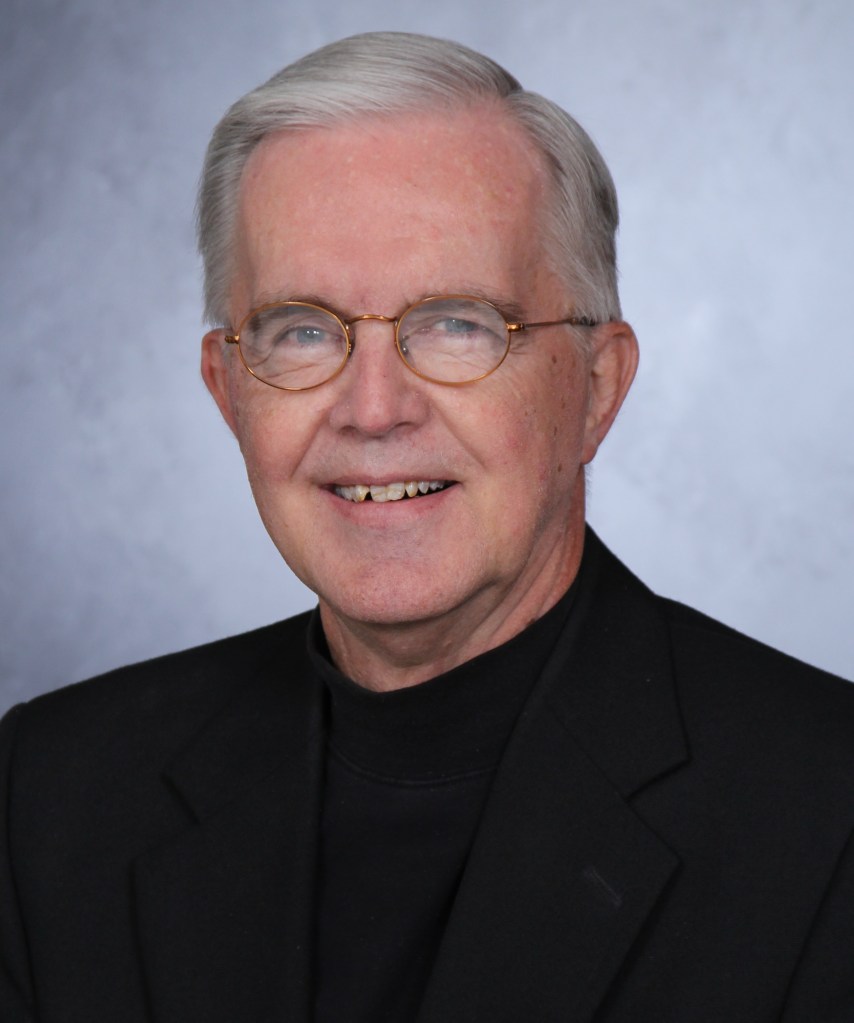
Mike Patrick is retired as Chaplain and Ministry Education Coordinator at Hendrick Medical Center
Top Photo by Isabella Fischer on Unsplash
 Spirit Of Abilene