
Lasting Ripple Effects

By Nancy Patrick
Have you ever felt so full of competing emotions that your brain, heart, and gut could not sort them out for labeling purposes? I find myself in that commingled state as I write this article.
We like to think that we can bounce back to our former selves after any bad decision we make—that we can receive forgiveness and restoration of our lives before the bad choice. This type of dismissal does not usually happen.
Sometimes the “bad” incident or decision comes from an outside source, but the effects ripple through many people’s lives. I haven’t decided which is worse—that I created the tragedy or that someone else had the audacity to mess with my life.
As a baby-boomer, I grew up with a list of fatal errors to avoid. Number one on the list for girls was not getting pregnant before marriage. Of course, that also meant abstinence from pre-marital sex. Our parents seemed to fear social judgment more than they cared for their children.
Most people in my world shared many common beliefs that defined our tribe. In my early years, I learned that cursing, dancing, drinking, premarital sex, unwed pregnancies, and any other deviation from our tribe’s creed would reap severe judgment from our social circle.
During my seven decades of life, many of those verboten activities have become less sinful than in my youth. One example relates to dancing. In my young Baptist circle, dancing was forbidden as an activity that could possibly lead to a more intimate type of physical contact. In 1968 when I graduated from Abilene High School, we did not have proms for that very reason.
I cannot say exactly how I feel about some of the changes in social mores over the years. I certainly don’t want teenagers to have babies or make unwed pregnancy seem like a viable option; however, I sadly remember the harsh censure of girls and their families when they found themselves in that predicament.
Surely we can find a balance between judgmental condemnation and overt approval. Can we teach strong morals and ethics and at the same time include understanding and forgiveness?
Many of us have a day in our past that has become the defining moment of our lives. In other words, we measure our lives by before or after that event occurred. I actually have two days that dramatically changed my life and the direction I planned for it.
I have always been emotional and demonstrative. One of those days occurred when I pulled into my garage after a trip to the grocery store. My husband greeted me with some devasting news that caused me to collapse to the floor.
In that moment, everything I had planned and hoped for collapsed like a snow man in the sunshine. I felt that someone I deeply loved had made a mistake that would cause him irreparable damage.
The effects of this event would permeate many lives permanently. I was devastated. I thought my world had ended. My dreams crumbled.
Although I did not cause this tragic situation, I suffered greatly as a result; now twenty-six years after this defining day, I still live but not the way I had planned or wanted.
The other defining day again crashed into my life without regard for my desires or willingness to participate in the changed direction.
How did things work out? With many tears, much screaming into pillows, and burning rage, I adapted to the detour. I forgave those who caused my grief, but those relationships have some scars to remind me that much of life reaches beyond our control.
Human beings have many wonderful relationships in life. We have our nuclear families, our friends, our classmates, our colleagues, and our mentors. People in any of those categories can hurt us because when we care and love, we make ourselves vulnerable.
One of my favorite novels to teach was Nathaniel Hawthorne’s The Scarlet Letter. The plot involves an adulterous couple, their child, and the estranged husband of the woman. Throughout the story, the husband’s anger and bitterness roil in his soul to the point that his purpose in life becomes the destruction of his wife’s lover.
This man’s rage destroyed not only the lover but also himself. The narrator of the story states the theme clearly: “Be true! Be true! Be true! Show freely to the world, if not your worst, yet some trait whereby the worst may be inferred!”
This theme indicates the importance of transparency in our lives, the practice of honesty and humility that tells those around us we are not perfect. We join with everyone else in the human race as sinners.
When a heinous injustice or betrayal occurs, rather than shunning the offending party, we are able to forgive that person as God forgives us and that person. This forgiveness does not necessarily mean restoration of the relationship nor does it ignore the painful consequences of the betrayal.
Our fear of transparency exists because we have a tendency to judge and criticize others. Because so many of us fear our own inadequacies and failures, we try to hide them so we can feel better about ourselves.
The problem with that practice is that if everyone does it, then everyone is looking to point the finger of judgment at everyone else. Thus, we build protective walls around ourselves that warn others to stay away.
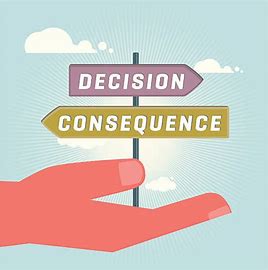
Some bad decisions cause permanent damage just as an incision will leave a scar. The damage may even be more severe than a scar. Life after that event may be forever different, but that defines “consequences.” We can repent the action and ask forgiveness, but we cannot remove the consequence.
Nancy Patrick is a retired teacher who lives in Abilene and enjoys writing
 Spirit Of Abilene