
Fall Risk!

By Nancy Patrick
Many things can fall—snow in avalanches, rocks on a mountain, water over a sudden drop in a river bed, and even people. People can actually fall both physically and morally. We all know the story of the fall of humanity reported in Genesis.
This type of moral fall can result in loss of reputation, relationship, financial stability, and even freedom if the fall resulted from illegal actions. I once wrote a poem about a mentor who fell from a metaphorical pedestal upon which I had placed him. Experiencing that kind of fall leaves the admirer feeling cheated and sad.
Although all falls can cause many kinds of devastation and loss, another kind of fall becomes a severe threat to people as they age. These physical falls can change a person’s life in a split second.
Judge Judy Sheindlin once asked her doctor how to stay healthy in her elder years, to which he responded, “Don’t fall.” Sounds simple, doesn’t it? Well, it is not simple. The older we become, the less balance, bone strength, and muscle tone we have.
As a woman with bone density loss, I have already lost two inches from my height as my spine continues to degenerate. That sounds ominous, I know. I describe it to friends that my spine is turning to saltine crackers.
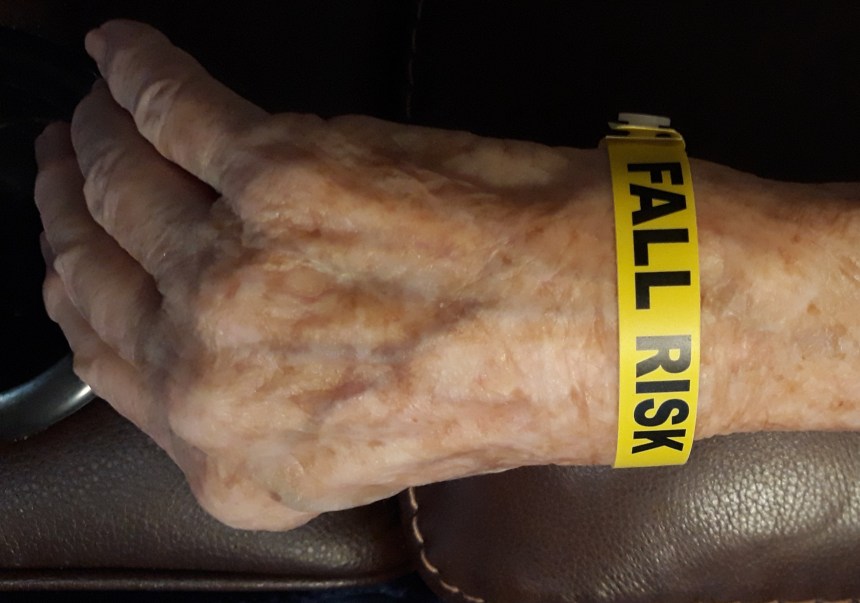
Until my bone health deteriorated so much, I had thought I would have a disease to finish me off, but now it looks like my skeletal issues will do me in. The threat of falls is ever present in the lives of senior citizens. This threat requires constant attention to our surroundings and our routine activities.
Over the years I have fallen many times, sometimes with minor consequences and other times with major injuries. Sometimes a cast on an arm or leg will suffice, but a fractured vertebrae requires a more complicated treatment. Although anyone at any age can fall, consequences of falls become much more severe as bone density deteriorates with age.
You have probably seen the Buick commercials in which a driver seemingly accomplishes a feat that others in lesser cars could not achieve. An observer says, “That is so you,” meaning the driver’s reputation for excellence is well known.
I used to be that person known for speed, accuracy, A+ performance, and efficiency. For many of us, learning that our value does not rest in our competence but in our humanity is a difficult lesson to learn.
Jesus loved widows, children, the poor, the handicapped, and the powerless. Those are the ones often undervalued because they can do nothing but “be.” Accepting my status as a “fall risk” tells me that not only can my body fall but also my spirit can fall.
Falling—whether physical, emotional, or spiritual—is painful, but it can also be instructive. Recovery insists that we stop, look, and listen to the signs around us. I much prefer that the judgment “that is so you” refer to my resilience and faith rather than in my physical prowess.
Nancy Patrick is a retired teacher who lives in Abilene and enjoys writing
 Spirit Of Abilene
oh Nancy
LikeLike