
The Parliament of the World’s Religions: Not Simply Kumbaya and Warm Fuzzies

Editor’s Note: Mark Waters was one of seven Abilenians who attended the Parliament of the World’s Religions in Chicago Aug. 14-18. His report on the experience follows. Several Abilenians, including Waters, presented papers or were members of a panel
By MARK WATERS
The Parliament of the World’s Religions met August 14-18 in Chicago. Our theme was “A Call to Conscience: Defending Freedom and Human Rights.” The first Parliament was held in 1893 and did not reconvene until 1993. Since then, Parliaments have been held in Chicago (1993), Cape Town (1999), Barcelona (2004), Melbourne (2009), Salt Lake City (2015), Toronto (2018), virtually (2021), and again this year in Chicago. I’ve now participated in four convenings. Kofi Annan’s words, “More than ever before in human history, we share a common destiny. We can master it only if we face it together” reflect a central motive of Parliament meetings and the work that results between gatherings.

Left to right are Abilenians Anthony Avina, a McMurry University student, Mark Waters, Russell Miller, and Angela Nicolin Starr at the Parliament of the World’s Religions.
This year, over 7,000 people from approximately 80 nations representing 200 religious, indigenous, spiritual, humanist, and worldview traditions came together at McCormick Place Lakeside Center with a fantastic view of Lake Michigan. We attended plenary sessions featuring internationally known speakers and break-out sessions on hundreds of topics of interest.
McMurry University and the Abilene Interfaith Council (AIC) came together to send a group to the Parliament. Dr. Angela Nicolini Starr, Linda Goolsbee, and I represented the AIC. The Rev. Dr. Philip LeMasters, the Rev. Dr. Russell Miller, Anthony Avina, and I attended in behalf of McMurry. Dr. LeMasters, McMurry religion professor and Orthodox priest at Abilene’s St. Luke Orthodox Church, led a breakout session entitled, “Human Rights and the Quest for Peace in Orthodox Christianity.” The three of us from the AIC presented a panel named, “Navigating Obstacles: Interfaith Work in the Buckle of the Bible Belt.”
In the interest of the Parliament’s “call to conscience,” I want to devote this article to clarifying stereotypes and explaining positive motivations of the interfaith movement.

Mark Waters, center, with Janie Sellers and Rob Sellers, religion professor emeritus at Hardin-Simmons University and former chair of the Parliament of the World’s Religions.
First, a frequent stereotype is that one has to sacrifice or water down one’s own religious convictions in order to participate in interfaith cooperation. This is absolutely not the case. The central operating principle of the Abilene Interfaith Council and of interfaith work at McMurry University is what we call “civic pluralism.” This philosophy is derived from Interfaith America’s working definition of “pluralism” which is “respect, relationships, and cooperation for the common good.” We add the modifier “civic” because the term pluralism is easily misunderstood due to multiple usages of the word in religious studies.
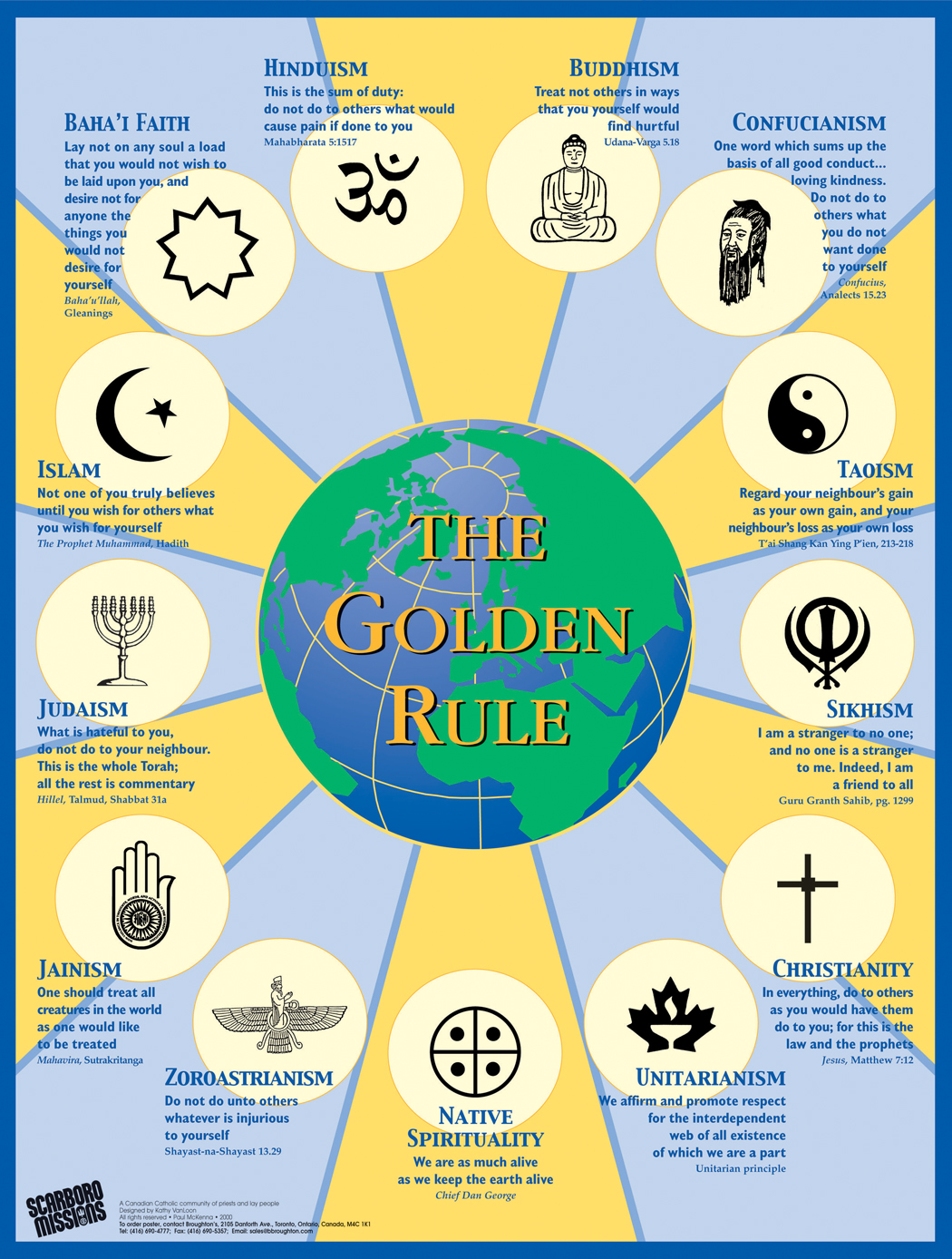
Civic pluralism means that any person of good will, holding almost any worldview, can engage in respect, relationships, and cooperation for the common good across lines of religious difference. It boils down to being a good neighbor and cooperating to alleviate social ills. People of most religions, worldviews, and secular perspectives can behave in this constructive way because of their worldview, not by watering it down. People do not have to agree theologically or even have a theology in order to practice the Golden Rule.
A second, almost comical stereotype of interfaith work, is that it is a bunch of hippie-types gathering for a superficial love fest, pretending that genuine religious differences do not exist, and singing Kumbaya. I have to admit that this phenomenon happens occasionally and happened more frequently in the past. It is a stereotype because there is some truth to it. There is nothing wrong with feel-good, Kumbaya meetings, but they typically involve no real cooperation for the common good outside of their own group. These gatherings usually do not lead to interfaith “work.”

A representation of people from all over the world attending the Parliament of the World’s Religions
Finally, a third stereotype is that interfaith work is confined to academics or professional practitioners of different faiths engaging in “dialogue.” Now, dialogue and mutual understanding are extremely important and can lead to positive outcomes. I value dialogue and teach a course at McMurry called “Dialogue with the Other.” However, the stereotype in this case is that the interfaith movement is mostly about dialogue. We earned this stereotype because, historically, this was largely the case. Some well-intended people still refer to the movement as “interfaith dialogue.” I used to do the same. I have started being very intentional about using language like “interfaith collaboration,” “interfaith work,” or “interfaith movement” to emphasize a broader vision. We are not going to accomplish much that is productive if we confine our efforts to dialogue, especially if such dialogue is limited to professional clergy and religious studies professors.
These stereotypes bring us back to the Parliament of the World’s Religions. All three stereotypes above could be found among some people participating in Parliament events this year and in the past. Nevertheless, the Parliament, as a catalyst of a movement, is seeking to grow past these stereotypes. This year’s theme, “A Call to Conscience: Defending Freedom and Human Rights,” is a clarion call to positive action. The meeting was definitely not set to the tune of Kumbaya. We learned about and were encouraged to go home to create helpful ways to address troubling issues like the degradation of women around the globe, climate change, the threat of extremist religious nationalism which is gaining steam across the planet, the marginalization of and bigotry toward various people groups, and more.
How can these things happen locally? The Abilene Interfaith Council is working on a strategic plan with intentions of being more active in the community through service and allyship. McMurry’s interfaith leaders hold the same values and are committed to preparing students to live in and have a positive impact upon religiously diverse communities. Scroll to the bottom of this page and submit your email address if you want to receive AIC information and become involved in interfaith activities.
Mark Waters is a religion professor at McMurry University and member of the board of the Abilene Interfaith Council
 Spirit Of Abilene
Thank you all for representing us.
LikeLike