
Meet Virginia Henderson Yates
By Marianne Wood
This essay contains the script for an Abilene Women’s Club presentation I gave on May 23, 2008, and subsequently shared with other civic groups. It will be included in a collection of stories I call Extraordinary Lives Among Us. I hope you will enjoy reading about an amazing American woman, Virginia Henderson Yates, a perfect choice to feature during Women’s History Month. But first, here’s how it came about.
I compiled Virginia Henderson Yates’ story from items donated to the National WASP WWII Museum in Sweetwater while I served as director. Though I never met her, I know Virginia better from her effects than many people I have known for years. I chose her in part because her first name is the same as my paternal grandmother’s name and because her life inspires me.
Imagine her speaking with a southern accent as you read her story, told as if she were seated across from you, wherever you feel comfortable. She was among many WASP–living and dead–that I got to know while I worked two years for this wonderful organization.
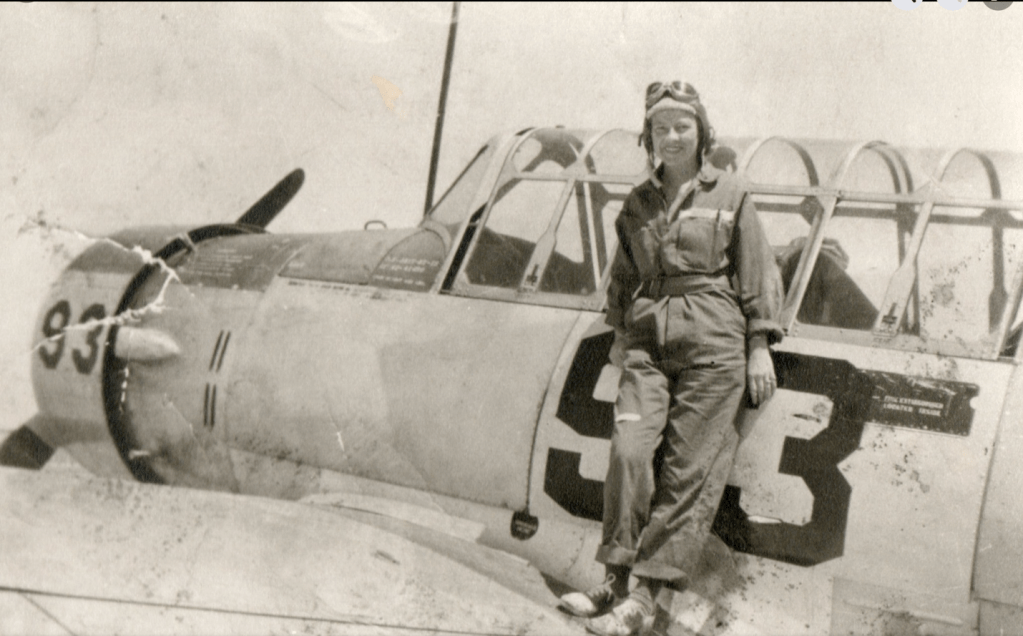
Photo courtesy of Hannah Maloney Johnston, Virginia Yates’ niece
Hello! I’m Virginia Henderson Yates, and I’m headed to Avenger Field in Sweetwater to become a WASP: one of the Women Airforce Service Pilots.
There is a critical need for women pilots now that the wars in Europe and the Pacific are straining our reserves of male pilots. But we don’t want the enemy to know it, so keep that under your hats.
I have this telegram that tells me to report at my own expense at 10:00 on April 25, 1943, to the commanding officer of the officer training detachment. I’ll make $150 month during my “satisfactory pursuance of flying instruction under army control. No allowance is made for subsistence and maintenance during training, and no uniform will be issued.” We are civilians; I guess that means we pay our own way home if we wash out or worse.
I’m very excited. I’ll get to train in the BT 13, a basic trainer, and later in the gorgeous AT-6, an advanced trainer. The girls fly only 17 different aircraft at Avenger, but WASP will fly all 77 planes in the army’s arsenal before the war is over. Though we won’t fly in combat like our sisters in Russia, we’ll ferry aircraft, tow targets, test airplanes, and teach others to fly–even the guys. One of the instructors at Avenger Field is Dot Swain–an artist of all things. She’ll get the bug to join us and become a WASP herself. Later, she’ll create statues of us that you’ll be able to see in Sweetwater, at the Air Force Academy, and even in Wisconsin.
I hail from Adrian, Georgia. I have degrees from both Georgia State College for Women (1936) and Emory University (1938). I served as librarian of the city schools in Greenwood, South Carolina. During this time, I got my pilot’s license from the Civil Aeronautical Authority. I was the only woman in my class. They cut off my shirttail (as is the custom) when I soloed and “had to buy the men Coco-Colas all around to celebrate the event. The sky is a mighty big space when you take a plane up for your first solo flight, and the landing field gets unbelievably small.”
Most recently, I worked as a librarian at Borinquen Field, Puerto Rico.
I will graduate as part of the class 43-W-6 at Avenger, becoming one of 1,074 women to earn their WASP wings. “43” is the year, “W” stands for woman, and 6 is the number of our class. The last class will be 44-W-10, dubbed the “last lost class of Avenger Field” because the program will be deactivated the month they graduate. That will be sad for all of us, but the good news is that it means fewer casualties. However, that will eliminate the need for women pilots.
I’ll bet you’re wondering if I will have any adventures in the air. Yes indeed. On August 5, 1944, while I am stationed at Love Field in Dallas as a ferry pilot, “I will take off from Patterson Field in an L-3-B. My mission will be the delivery of said aircraft to Minneapolis, Minnesota. Ten miles west of Patterson Field, approximately fifteen minutes after take-off, black smoke will start boiling out of the left side of the cockpit, so I will switch off the fuel, ignition, and generator, and the smoke will subside somewhat. I will execute a forced landing, without damage to the aircraft or pilot, on John Landis farm.”
A few years later, I’ll be an army librarian in the Philippines. Then, from 1950-56, I’ll serve in the US Air Force Reserves and the Civil Air Patrol, and upon being called from inactive status, I will serve as an Education and Training Officer on active duty from 1956 to 1964, retiring as a captain.
I’ll have to quit flying in 1961 because of a perforated eardrum and hearing loss. But I’ll have another idea: ballooning!
Yes, in July the next year, I’ll apply for a free balloon pilot certificate.
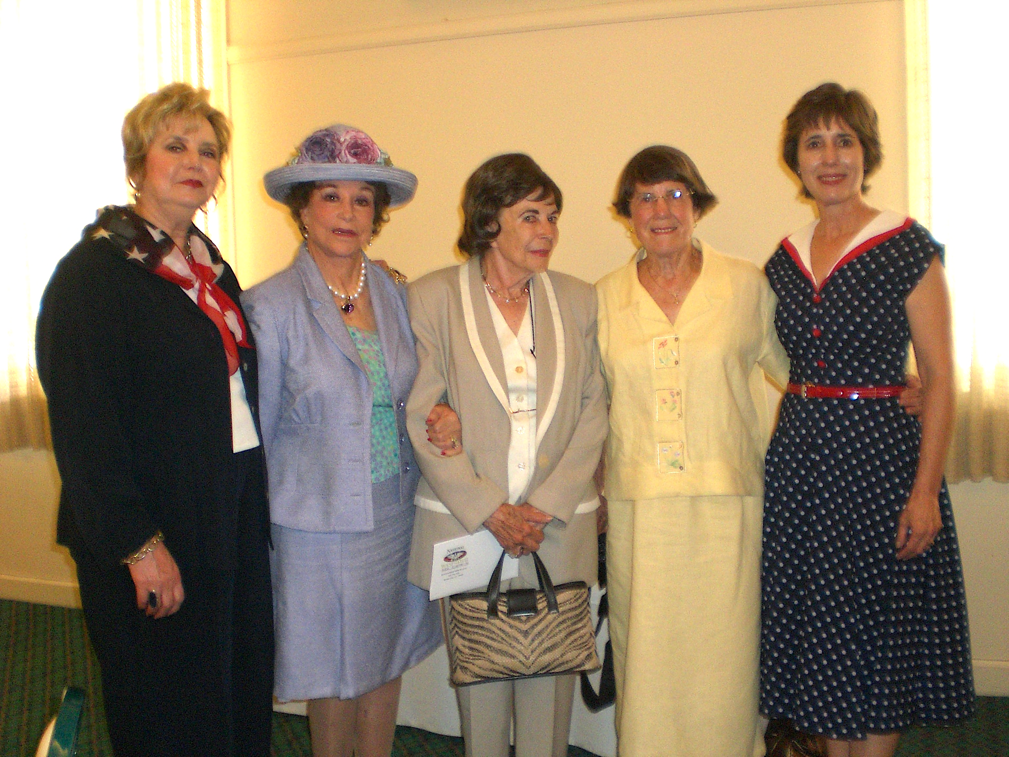
Micki Wright, Patty Taliaferro, Amber Cree, Marjorie Andrews, Marianne Wood. The four Abilene general aviation pilots to my right include my mother, Marjorie Andrews.
All the WASP (it’s already plural) I’ve met or talked to on the phone were like this woman. They were energetic and enthused about life even in the ninth decade of their lives.
WASP came from every walk of life. Some came from farms and schools; others came from jobs as actresses, models and dancers. There were heiresses like the Florsheim Shoe daughter. There was even a black jack dealer. But they all had two things in common: a patriotic sense of duty and a love of flying!
On April 17 and 18 this year, the museum honoring these women will host their annual homecoming event. For more information visit waspmuseum.org.
Marianne Wood enjoys writing, painting, and teaching art
 Spirit Of Abilene
Pingback: Omie Wilks, A Hidden Life | Spirit Of Abilene
These remarkable women put me to shame. Thank you for sharing the story.
LikeLike