
Chaplain at Nuremberg
Click here to read an accompanying piece by Nancy Patrick.
By Mike Patrick
About 10 years ago, I became fascinated with a little-known minister of a previous era, partly because we both served as chaplains, but especially because of his role in history. Rev. Henry Gerecke (rhymes with Cherokee), was ordained at Christ’s Lutheran Church in St. Louis, Missouri, in 1926 at the age of 33.
During the Great Depression, Rev. Gerecke transitioned from pastoring to leading social work ministry in north St. Louis. It was at that time he added his ministry of doing chaplaincy work at a local prison and a hospital.
As World War II began, his oldest son already served in the Army and after Pearl Harbor a second son enlisted. Finally in 1943, two months before turning 50, Henry volunteered to join the war as an Army Chaplain. He did a short one-month training stint at Harvard University’s Chaplain School and eventually was assigned as a hospital chaplain in southern England to minister to wounded soldiers returning from the front. Two years later after the Germans surrendered on VE Day [Victory in Europe – 8 May 1945], Henry was reassigned, as were many, to Munich, Germany, to re-establish the hospital there.
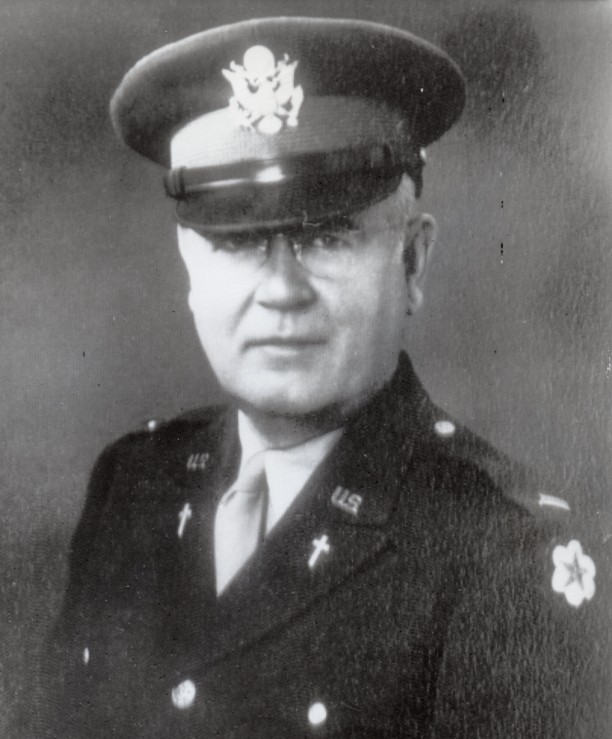
Chaplain Henry Gerecke
At the same time, the authorities at Nuremberg prison made preparations for the Trial of Major War Criminals. The commandant, Colonel Burton Andrus, requested Chaplain Gerecke to be transferred to the prison. He would naturally fit their need as an older Lutheran who spoke German and had done prison chaplaincy work in St. Louis. So, Henry and a Catholic priest both became the chaplains for the twenty-one Nazi war criminals. The priest was 36-year-old Sixtus Richard O’Connor, who had been stationed at Camp Barkeley near Abilene for a short time.
How was he going to minister to monsters? He had seen the residue of concentration camps and furnaces. Fifteen prisoners requested a Protestant chaplain; the remaining six requested a Catholic priest. In November 1945, as the trial began, one of the prisoners later recalled that Gerecke “made scarcely an impression” on them. How was this preacher from St. Louis going to make an impression on the disciples of Adolf Hitler? They recalled that Henry wanted them to think more of the judgment of God than the judgment of the International Military Tribunal.
Almost a year after the trial began, convictions were handed down on 16 October 1946. One prisoner, Hermann Göering, mysteriously committed suicide the night before his scheduled visit to the gallows. Chaplain Gerecke had the responsibility of escorting five of the ten who received the death penalty one by one to the gymnasium where they were executed by hanging (near the basketball goals). Chaplain O’Connor escorted the five Catholics. Henry was quite shaken because it was the first time that he had watched a man die. Two weeks following the executions, he returned to the United States.
Toward the end of his time in Nuremberg, an amazing incident occurred. Because of his lengthy service in Europe, his wife Alma requested that the Army send him home. The prisoners had become both accustomed to his presence and appreciative of his non-judgmental spirit. One of them, Hans Fritzsche (Minister of Propaganda), wrote a letter to Alma explaining how much they needed him. It was translated into English by another prisoner, Baldur von Schirach (former head of the Nazi Youth Movement, then promoted to head of administration in Vienna and responsible for exporting 65,000 Viennese Jews to concentration camps). A partial segment of the letter reads:
“Please consider that we cannot miss your husband now. During the past months he has shown us uncompromising friendliness of such a kind that we cannot be without him in these surroundings in which – but for him – we only find prejudice, cold disdain, and hatred…We simply have come to love him. In this stage of the trial, it is impossible for any other man than him to break through the walls that have been built up around us; in a spiritual sense even stronger than in a material one.”
To Chaplain Gerecke’s surprise, the letter was signed by all twenty-one prisoners. Henry was a true example of Jesus’ command to love your enemies.
[Note: If you wish to read more, look for the book about Gerecke’s life entitled Mission to Nuremberg written by Tim Townsend (2014).
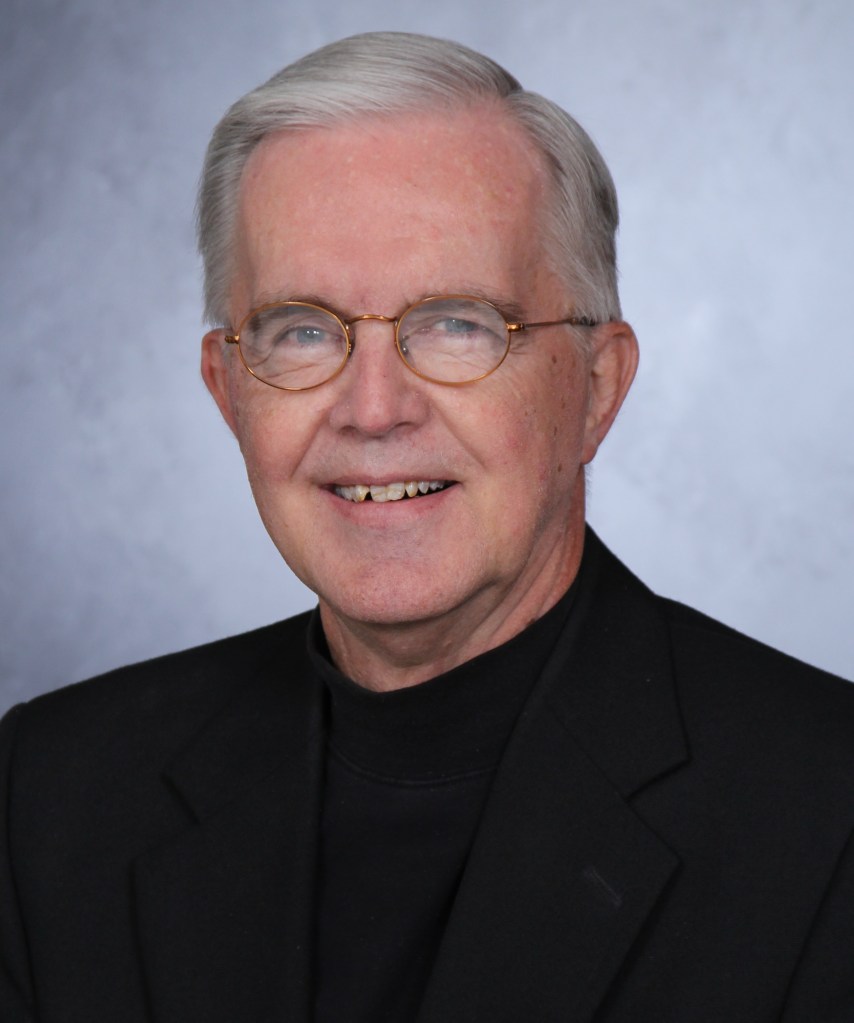
Mike Patrick is retired as Chaplain and Ministry Education Coordinator at Hendrick Medical Center
 Spirit Of Abilene
Pingback: Wars and More Wars | Spirit Of Abilene