
Advent in the Jubilee of Hope

The following article was written by the Most Reverend Michael Sis for the West Texas Angelus, the monthly newspaper of the Catholic Diocese of San Angelo. It is posted here with permission.
By Bishop Michael Sis
Advent is a season of hope. We mirror the ancient Israelites’ longing for the coming of the Messiah, and we anticipate the second coming of Christ at the end of time. We are immersed in a time of sacred waiting, fervently praying with the Church, “Come, Lord Jesus” (Rev 22:20).
A classic Advent hymn is O Come, O Come, Emmanuel. The Hebrew name “Emmanuel” literally means “God is with us.” This title of Jesus Christ highlights the miracle of the Incarnation of God. God loved us so much that he chose to send his son in the flesh to share our human condition. The presence of God with us is a tremendous source of hope.
Throughout the world in the Catholic Church, the theme of this Jubilee Year 2025 has been “Pilgrims of Hope.” Since this is the last month of the Jubilee of Hope, and since Advent is the season of hope par excellence, this article will reflect on the virtue of hope as we draw the Jubilee Year to a close.
When Pope Francis called for the Jubilee of Hope, his desire was to provide an opportunity for each one of us to be renewed in hope and to become more effective agents of hope for others. In our imperfect world, we face great challenges, but we are a people of hope, and our hope sustains us with a deep sense of trust in God.
God is present in every circumstance, without exception. God is present, even when we can’t feel Him. God is never absent, even in the most difficult circumstances. God is closest when we feel most abandoned (Psalm 34:18). He doesn’t wait for us to pull ourselves together—he comes near in our mess.
Jesus promised us, “I am with you always.” In fact, throughout the Scriptures, in the Old Testament and the New Testament, there is a consistent message from God: “I have been with you in the past, am with you now, and I will be there for you in the future.” Over and over again, God says, “Do not be afraid, for I am with you.” In the last sentence of Matthew’s Gospel, Jesus says, “I am with you always, to the end of the age” (Mt. 28:20).
The Catechism of the Catholic Church explains what hope is: “Hope is the theological virtue by which we desire the Kingdom of Heaven and eternal life as our own happiness, placing our trust in Christ’s promises, and relying not on our own strength, but on the grace of the Holy Spirit” (CCC, no. 1817).
As Catholics, we are realists. We base our lives on reality. Reality includes both what is visible and what is invisible, both the material world and the spiritual world. There are, of course, some ugly things in our visible, material world that undermine our hope, but there is more to reality than just that. Reality also includes the invisible, spiritual activity of God. As people of faith, we see clearly the darkness and hardships before us, but we also see the transcendent goodness of God. God is always at work, and that gives us hope.
We acknowledge the storm around us, but we refuse to drown in it. We focus on God in the midst of the chaos. If all we do is focus on the storm, we are not acknowledging the whole picture of all of reality. 1 Peter 3:15 states, “But in your hearts honor Christ the Lord as holy, always being prepared to make a defense to anyone who asks you for a reason for the hope that is in you.”
As the year 2025 draws to a close, there are many things that give me hope. Here I will highlight just a few of them.
- Our Catholic Church is experiencing a surge of new Catholics through the OCIA process. For example, in the Rite of Election in our diocese last spring, we had to add an additional ceremony to accommodate the larger number of converts. Again, this fall’s OCIA groups in many our parishes are larger than ever.
- There are several movements of evangelization and renewal in our diocese that are helping people come to deeper levels of discipleship. These include ACTS, Cursillo, Kolbe Ministries, SEARCH retreats for teenagers, That Man is You, men’s conferences, women’s conferences, and many others. I am especially grateful for the large number of youth in our diocese who have been attending SEARCH retreats and Steubenville conferences. They are falling in love with Jesus Christ, and this gives me tremendous hope for our future.
- The Project Rachel Ministry in our diocese has grown significantly this year, bringing a deep experience of mercy and healing to those who have been affected by abortion.
- Another source of hope has been the tremendously generous response to the tragic floods of July 4, 2025. Donated funds were distributed through Catholic Charities of Odessa and Catholic Outreach of San Angelo, along with many other emergency relief efforts to help people get back on their feet. The broad community response has inspired hope in the face of natural disaster.
- Our first American Pope, Leo XIV, gives me hope for many good things to come in our universal Church.
I encourage you, the reader, to call to mind the things that anchor your hope. Embrace those things, celebrate them, and be prepared to articulate them with others. Be ready to encourage others to have hope. That’s what it means to be an agent of hope.
Hope is a theological virtue infused in us by God. We cannot create hope by our own human efforts; we can only receive it as a gift from God. Therefore, whenever we find ourselves running low on it, we must pray to God for the gift of hope.
According to the Catechism of the Catholic Church, hope keeps us from discouragement. It sustains us during times of abandonment. It opens our hearts in expectation of eternal happiness in union with God (CCC, no. 1818). Hope brings joy, even in the midst of the deepest hardships. My old friend, Bishop Bill Wack, says that people of hope live differently, we die differently, and we mourn differently.
Our hope is not just naïve or wishful thinking. It is not delusion or suppression. It is not a denial of our pain. It is acknowledging the imperfections of our world, our Church, and ourselves, and also acknowledging the reasons for our hope.
Hope is not a mere passive attitude. It leads us to active engagement to do what we can. In his encyclical on Christian love, Pope Benedict XVI offers a hopeful vision of how each of us must do our own part, and we must trust that God will do God’s part. He writes, “There are times when the burden of need and our own limitations might tempt us to become discouraged. But precisely then we are helped by the knowledge that, in the end, we are only instruments in the Lord’s hands; and this knowledge frees us from the presumption of thinking that we alone are personally responsible for building a better world. In all humility we will do what we can, and in all humility we will entrust the rest to the Lord. It is God who governs the world, not we. We offer him our service only to the extent that we can, and for as long as he grants us the strength” (Deus Caritas Est, no. 35).
Hope is a call to action. It motivates us to invest our time, energy, and resources so that others may have a brighter future. Hope impels us to be responsible stewards of our land, air, and water, so that future generations may inherit a healthy planet. Hope prompts us to carry out the spiritual works of mercy in order to help another person get to Heaven. It inspires the catechist to pass on the gift of faith. When things go badly in our relationships, hope moves us to seek healing, recovery, and reconciliation. Hope stimulates us to recruit and form future leaders for the next generation.
As the Jubilee Year 2025 draws to a close, and as we experience this holy season of Advent, we open our hearts to God’s continual presence and action among us. Hope has a central place in our Catholic Christian world view, and no one can take our hope away from us.
For deeper reflection on the virtue of hope, I would recommend reading any of the following Catholic writings:
Pope John Paul II: Crossing the Threshold of Hope
Cardinal Joseph Ratzinger: Theology of Hope
Pope Benedict XVI: Spe Salvi
Archbishop Francis Xavier Nguyen Van Tuan: Witness to Hope, The Road of Hope
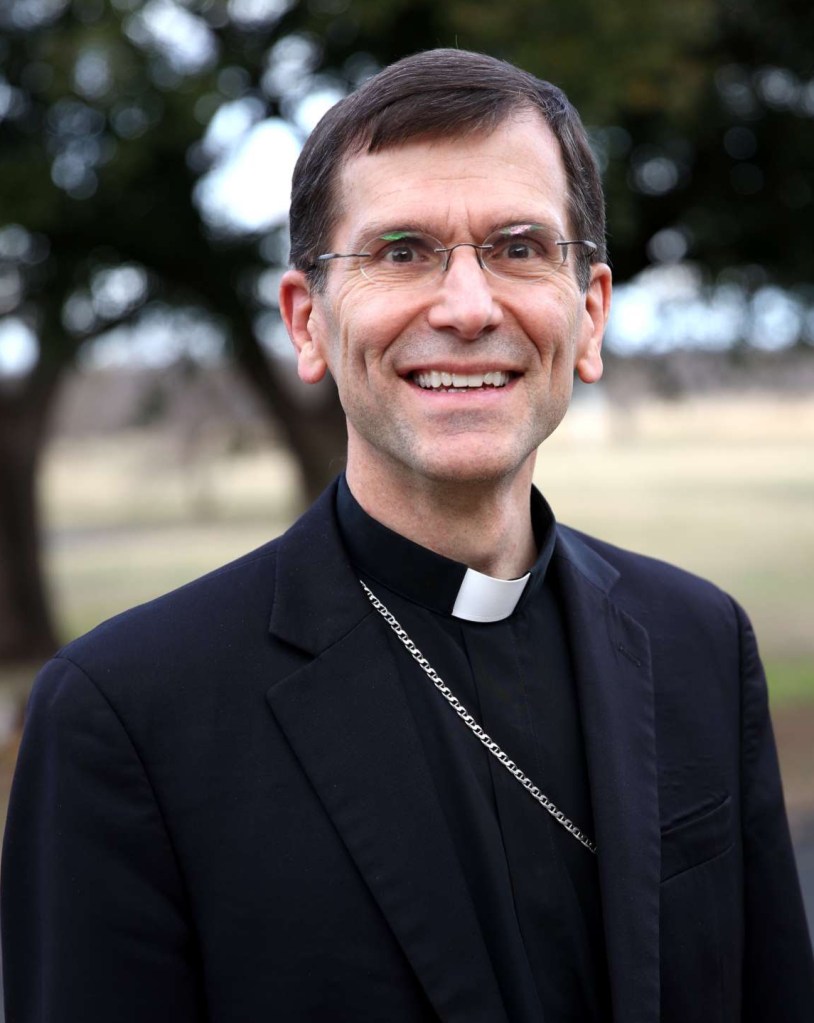
The Most Reverend Michael Sis is bishop of the Diocese of San Angelo
 Spirit Of Abilene
Pingback: The Season of Advent | Spirit Of Abilene