
Christian Higher Education

Dr. Mark Waters’ opinions in this article are his own. He is not speaking on behalf of his employer, McMurry University.
By Mark Waters
I am quite fond of McMurry’s Mission Statement, “Shaped by Christian principles, McMurry University challenges students to examine our complex world from multiple perspectives in preparation for lives of leadership, service, and professional success.” This statement is a manifesto for Liberal Arts education. To be clear, the “liberal” in Liberal Arts has nothing to do with political leanings or partisanship. It is simply an alternate word for “freedom.” The values as well as the academic content of Liberal Arts are intended to equip students to be good citizens in a liberal (free) democratic republic.
Consequently, I was pleased to see that Cornell University President, Michael I. Kotlikoff, echoed part of McMurry’s Mission in a recent New York Times opinion piece. He writes,
“The impact of our universities derives in no small part from their ability to equip students with the skills to evaluate evidence critically, consider issues from multiple perspectives, participate meaningfully in the exchange of ideas, and grapple with the difficult and the complex — in short, to participate fully and capably in a modern democracy. “(emphasis mine).
His article included a description of speaking events at Cornell that span the entire political, ideological spectrum. Then he shared a story about a recent panel discussion focused on the Israeli-Palestinian conflict. A few protesters came to the discussion but were promptly removed, thereby giving the hundreds of students and faculty in attendance the freedom to hear the thoughts of those on the panel. A video of the panel conversation is here.
Kotlikoff described the profound learning experience that resulted from the event despite the complex, contentious nature of the subject matter. He added:
“If Cornell were a business, we might have called the event a failure: The news coverage displayed only the disruption and ignored the rest. Fortunately for our students, Cornell is not a business. We are a university. And universities, despite rapidly escalating political, legal and financial risks, cannot afford to cede the space of public discourse and the free exchange of ideas.”
Kotlikoff’s thoughts bring us back to McMurry’s Mission Statement. “Shaped by Christian principles” begins and ends with the inviting, inclusive example of Jesus. Marginalized and oppressed folks were at the heart of Jesus’ ministry, indicating our responsibility to be hospitable and loving to all people, relationally and through the education we provide. Without exception, every human being is created in the image of God and of immeasurable worth. Being a Christian University does not, or at least should not, refer to narrow indoctrination or moralism, but to broad examination of the world that God has given to all humanity.
This broad examination “challenges students to examine our complex world from multiple perspectives,” thereby preparing them “for lives of leadership, service, and professional success.” These aspirations–leadership, service, and professional success–are central to a liberal arts education. While it is certainly necessary to teach technical/professional job skills in college, the question for higher education traditionally has been, “Are we equipping students to be good and contributing citizens in their communities, nation, and world following graduation?”
Liberal Arts aspires to train students with skills and values that are necessary for citizenship as well as crucial for any job. Pillar II of McMurry’s Second Century Strategic Plan names some of these skills and values, “oral communication, critical thinking, ethical judgment, working effectively in teams, working independently, self-motivation, written communication, servant leadership, cultural competence and real-world application of skills and knowledge.”
Last spring, students in my course “Dialogue with the Other” discussed the Palestinian-Israeli conflict as well as abortion, race, human sexuality, gender transition, prison reform, white Christian nationalism, interfaith relationships, and more. This class was held in the wake of several university presidents being fired or criticized for their handling of campus protests. We watched video clips of the congressional testimonies of presidents from Harvard, MIT, and the University of Pennsylvania. The class analyzed their responses and struggled, with great integrity and calm, to think of healthier ways to communicate, relate, and manage conflict.
My point is that 18–22-year-olds examined issues from multiple perspectives, learned from each other, disagreed with each other, exercised admirable critical thinking, but kept their cool and, perhaps most importantly, listened to each other.
The development of the prefrontal cortex of the brain apparently isn’t complete until around 25 years of age. If 18–22-year-olds can handle complex, contentious issues like the ones I named, surely those of us who are over 25, some of us way over, can do the same.
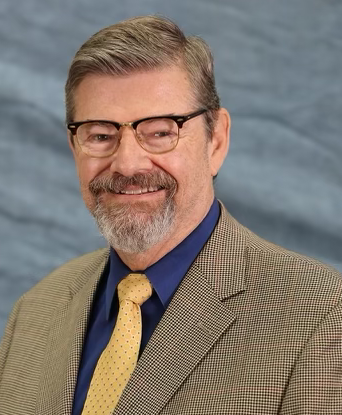
Mark Waters is professor of religion at McMurry University and chair of the Division of Humanities, Religion, and Social Sciences
Top photo credit: Corey Hess/The Ithacan
 Spirit Of Abilene
Excellent explanation of a complex issue dividing our society!
LikeLike