
Meet Steven Moore

By Loretta Fulton
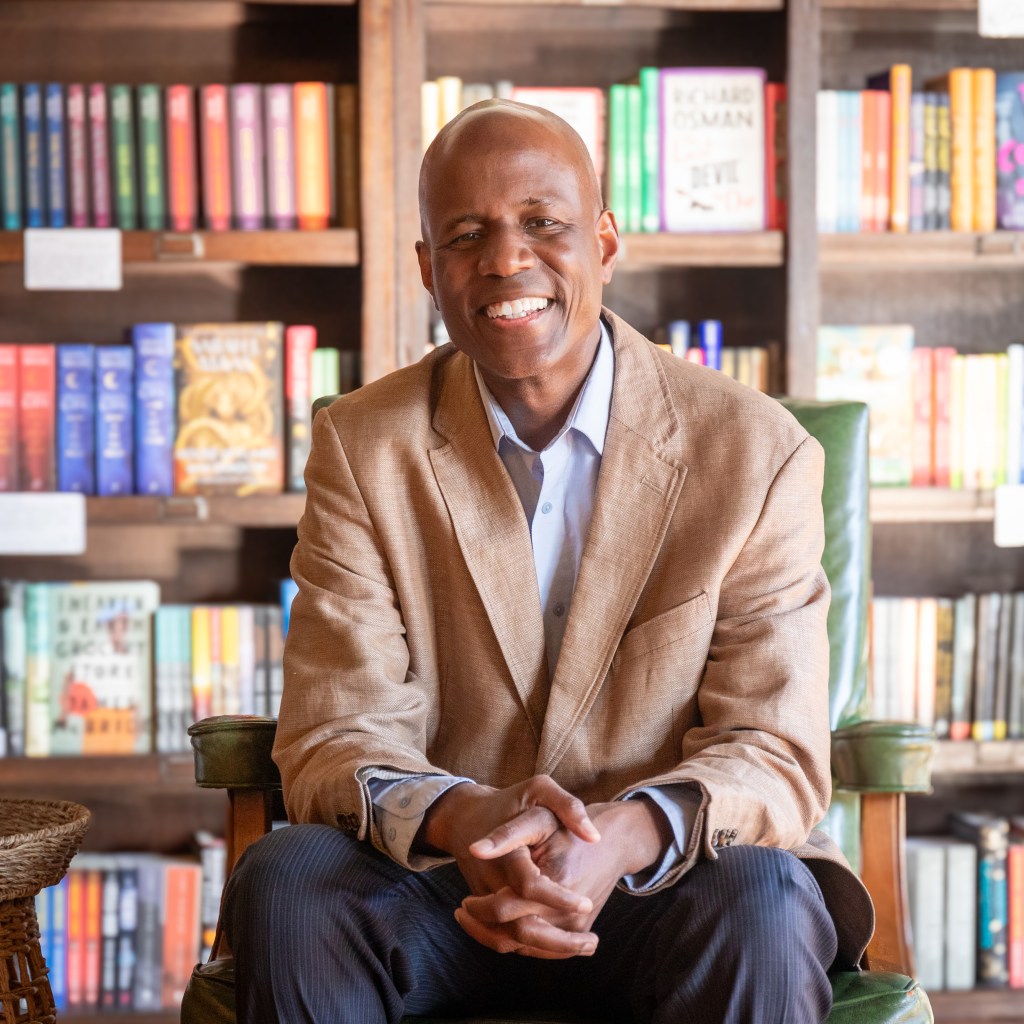
Seven and One Books will be the site of a book signing and reading for the first book of poetry published by Dr. Steven T. Moore, professor English at Abilene Christian University.
Hours will be 4-6 p.m. The store is located at 1138 N. 2nd St. Although Moore is a prolific writer, including poetry, The Horizon Never Forgets is his first published volume of poems. The title is drawn from a poem he wrote titled, “Ahmaud Arbery: Trial Verdict Just Announced.”
The poem was in response to the conviction of three men in the February 2020 murder of Ahmaud Arbery, an unarmed 25-year-old black man jogging in Satilla Shores near Brunswick in Glynn County, Georgia. The poem first appeared in Spirit of Abilene in April 2022.
Moore’s poems have been published in literary journals and other publications. His first book of poems is dedicated to his mother, who died in 2018. Her encouragement and inspiration paid off. Her son has written numerous poems and scholarly articles. He also wrote two children’s books based on a character named Theodore Thumbs, who is bullied in school.
“I write because I believe in a better tomorrow for all. That is what writers do. That is what poets do.”

BIO
Position: Professor of English at Abilene Christian University and President of the Texas Association of Creative Writers
Education: PhD, University of Nebraska (2007); MA, University of Nebraska (1996); BA, University of Wisconsin-Parkside (1994).
Previous Books: The Cry of Black Rage in African American Literature from Frederick Douglass to Ta-Nehisi Coates, 2020; Theodore Thumbs and the Yellow Balloon, 2020; Theodore Thumbs, 2016; The Cry of Black Rage in African American Literature from Frederick Douglass to Richard Wright, 2013
Q You are a prolific poet, but this is your first published collection of poems. Why are you just now publishing a book of your poetry?
A I have been writing poetry for years now, and my poems have found homes in literary journals and other publications, including here (Spirit of Abilene). But when my mother died in 2018, I felt moved to publish my first collection of poetry. She is the inspiration behind my work. She read poetry during her pregnancy with me and my twin, throughout our childhood, and we recited poetry together before she passed away. My first published book of poetry is dedicated to her.
Q Your new book deals with Black rage, a topic you have written about before and often speak about. Is writing about Black rage your way of dealing with the injustices that Black people still endure in this country?
A Yes, the book deals with rage. Many writers, such as William Shakespeare, Walt Whitman, Emily Dickinson, Frederick Douglass, Harriet Ann Jacobs, Langston Hughes, James Baldwin, and many others, have used the pen to express their thoughts and emotions while walking upon this earth. Martin Luther King Jr. and Malcolm X voiced their rage and frustrations at seeing Black bodies destroyed by hatred, writing to open our eyes to who we truly are. They wrote to bring healing to all of us. I write to highlight injustices that weigh upon the oppressed. I write for all of us—no matter our race, ethnicity, culture, identity, socioeconomic status, gender, or background—to fill this world with love, respect, peace, and compassion. I write because I believe in a better tomorrow for all. That is what writers do. That is what poets do.
Q Did you witness Black rage in your family and your community when you were growing up?
A Yes, I witnessed Black rage in my family and community while growing up. But I also witnessed the rage of those who despised the skin my parents wore each day. I saw the rage of those who attacked, mistreated, and disenfranchised my brother, my twin, and me because of our skin. I witnessed the rage of those who hated Blackness—not just when I was growing up, but even now. I still witness the rage of those who do not understand and refuse to understand.
Q What are some of the themes covered in The Horizon Never Forgets?
A My new book covers many themes such as death, loss, grief, hatred, rage, love, grace, forgiveness, compassion, and reconciliation.
Q What does the title refer to? Is it the title of a poem in the book?
A It is not a title of a poem in the book, but a line pulled directly out of a poem that first appeared here on Spirit of Abilene a few years ago. The name of the poem is “Ahmaud Arbery: Trial Verdict Just Announced.” The poem was in response to the conviction of three men in the February 2020 murder of Ahmaud Arbery, an unarmed 25-year-old black man jogging in Satilla Shores near Brunswick in Glynn County, Georgia. Here are the concluding lines which includes part of the title: “I look up again, deep and silent skies, see doves in flight,/drops of blood on their wings. They have grown/weary of escorting black bodies beyond that hidden place,/burned into the horizon that never forgets.”
Q You published two children’s books based on a character named Theodore Thumbs. They address the issue of bullying. Is that based on personal experience from your childhood?
A As you know, bullying is a major issue affecting many of our children, but it is also prevalent in colleges, universities, and workplaces. I witnessed it often while growing up and personally experienced it as well. But I had a friend who was bullied daily, which led to his untimely death. I think about him and his passing, and that is what inspired me to write both books.
Q In 2013 your published Cry of black rage in African American literature from Frederick Douglass to Richard Wright. Was that your dissertation, a published book, or both?
A Yes, it is based on my dissertation and then certain topics and themes were expanded in the published book. I also published an expanded edition of it with new material in 2020.
Q It’s obvious that Black rage has been of importance to you for a long time. How do you counsel Black students when they come to your for advice when experiencing rage themselves?
A This topic has been with me for a long time. I draw material from both books whenever I teach African American literature. I encourage all my students—not just my Black students—to channel their rage through the power of writing poetry. I also urge them to read and study more about this subject and African American history by engaging with scholars such as Cornel West, Henry Louis Gates Jr., bell hooks, Toni Morrison, Ta-Nehisi Coates, Austin Channing Brown, Michael Eric Dyson, Richard Rothstein, Tim Wise, and countless others. I also encourage them to be serious students of history—learning from it—and to allow the spirit of Christ to inspire us, move us, and embolden us to fight passionately for love, peace, and reconciliation in our world.
 Spirit Of Abilene
Congratulations on your new publication. ACU is lucky to have you.
LikeLike